
Global Perspectives
This editorial draws on a conversation with Dr. Ruhaila Maskat
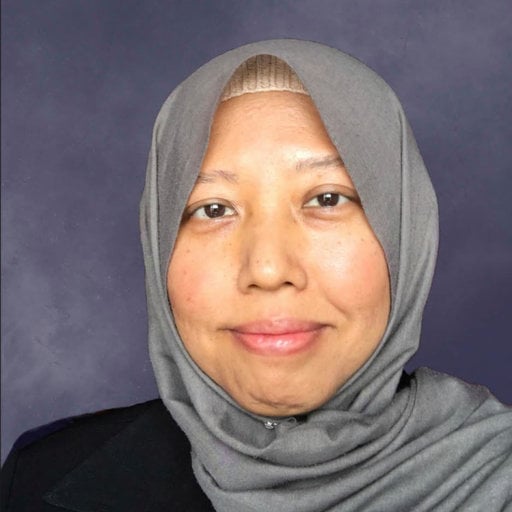
Ruhaila Maskat
Senior Lecturer and Researcher at Universiti Teknologi MARA (UiTM)
Dr. Ruhaila Maskat is a senior lecturer and researcher at Universiti Teknologi MARA (UiTM), specializing in data integration, dataspaces, and data science. She holds a PhD from the University of Manchester and has built a research portfolio spanning natural language processing, sentiment analysis, and machine-learning applications for Malaysian language data. Her recent work includes the development of a Malay psychological-emotion dataset—published in Data in Brief—focused on depression, anxiety, and stress expressions in social-media text, addressing key low-resource gaps in Malay NLP and supporting the development of more inclusive language models.
Key Takeaways
– The strategy behind building sustainable AI
– From ASEAN to a new model of complementary regional specialization
– The biggest bet: upskilling new talents
What if there was a way to develop an AI economy in a collaborative, sustainable, and people-centred way? Malaysia entered the AI race late—and that may be its greatest strength. While other nations sprinted to build data centers, hoard GPUs, and inflate forecasts, Malaysia watched from the sidelines. It studied the failures: power shortages in Taiwan, water-consumption controversies in Arizona, community pushback in Ireland, Singapore’s 2019 moratorium on new data centers. And then, in 2025, it began building something different.
Starting late, in fact, has allowed Malaysia to design a model that avoids these pitfalls rather than reacts to them. The organizing principle, as Dr. Maskat puts it, is Ekonomi Mampan dengan AI—a sustainable economy with AI. It signals an approach where AI infrastructure is expected to grow, but remains tied to environmental and energy constraints instead of insulated from them.
The shift is most visible in Johor, the southern state across the causeway from Singapore. This year, Google, Microsoft, and several global cloud providers confirmed or expanded large data-center projects there. The choice is deliberate: Johor has land, lower density, and access to ample water: everything Singapore struggled to provide after its 2019 moratorium. Malaysia may be benefiting from spillover demand, but it isn’t positioning itself as a secondary host. It wants to become the computing and GPU backbone of Southeast Asia—while doing something rare in the industry: insisting that environmental responsibility and technological expansion advance together, not in conflict.
This context also explains why Malaysia’s research labs are buzzing. Engineers are testing cooling systems suited to tropical climates, exploring renewable-powered facilities, and treating what could be a structural limitation—running server farms in 32°C (90°F) humidity—as an opportunity for innovation rather than a constraint.
Ekonomi Mampan dengan AI—a sustainable economy with AI signals an approach where AI infrastructure is expected to grow, but remains tied to environmental and energy constraints instead of insulated from them.
Its ambition is explicit: to become the “Switzerland of AI,” a neutral custodian of regional data rather than a passive user of foreign systems. The timing helps. As ASEAN chair in 2025, Malaysia had an unusual amount of regional visibility, and the convergence of ASEAN leadership, major tech investment, and national industrial strategy created momentum that attracted secondary waves of interest. The relationship with Singapore illustrates this logic: Malaysia provides the computational muscle; Singapore remains the financial and regulatory hub.
It’s complementary rather than competitive, a form of regional specialization that plays to each country’s strengths. This complementary relationship is formalized in initiatives like the Johor-Singapore Special Economic Zone (JS-SEZ), launched in early 2025 to deepen regional integration. The initiative facilitates cross-border goods movement, talent mobility, and a stronger business ecosystem, supporting cross-border digital infrastructure development.
But what sets Malaysia apart isn’t just infrastructure. It’s cultural architecture. The country is a genuine crossroads—Malay, Chinese, Indian, and sizable international communities living and working together, negotiating differences daily. That multicultural reality shapes a policymaking style built on mediation, incrementalism, and compromise. For global companies operating across jurisdictions, cultures, and political sensitivities, this kind of neutrality is an asset.
This ethos echoes in the New Industrial Master Plan 2030, which pushes Malaysia toward high-value sectors—semiconductors, electric vehicles, digital industries—without assuming transformation will happen overnight. AI fits neatly into that approach. Malaysia isn’t trying to outpace Silicon Valley or Shenzhen; it’s trying to build a durable, clearly defined role within Southeast Asia’s digital ecosystem.
Talent development is central to this effort. Universities have launched new AI degree tracks with specializations in fintech, robotics, and data governance. Under the AI for MY Future program, Microsoft has pledged to train 800,000 Malaysians, while other firms are rolling out certification programs at scale. The goal is straightforward: ensure Malaysians become not simply users of imported AI tools, but designers, operators, and regulators of an emerging regional system.
Malaysia’s late arrival doesn’t guarantee success. The energy investments required are significant, and competition from Indonesia, Vietnam, and Singapore remains fierce. But starting later has allowed Malaysia to build its AI infrastructure around sustainability, regional cooperation, and human-capital development—areas where early movers are now struggling to adjust.
Malaysia is not leading the global AI race in 2025. But it is pursuing a strategy aligned with its constraints, its cultural strengths, and its geopolitical position. And in a landscape moving as fast as AI, that alignment may prove more valuable than being first.