Global Perspectives

Hania Douglas
Māori language advocate and translator
Hania Douglas is a Māori language advocate and translator, with a passion for kaupapa Māori and the revitalisation of te reo Māori. She has worked across broadcasting, translation, and public sector communications to connect people through language and culture. Fluent in English and te reo Māori, Hania has contributed to projects ranging from Māori language awards to national education campaigns. She has also written extensively on Māori perspectives, history, and contemporary issues, weaving cultural knowledge into accessible storytelling. Outside of work, Hania is active in community initiatives and is exploring new ventures in language advocacy and cultural storytelling.
Overview
–Country: New Zealand
– Key Concepts: Āpōpō, te wā heke, spatialized time, ancestry, descendants, environmental stewardship
– Temporal Orientation: Past-facing, future-behind; time as lived and inhabited
– Historical & Cultural Influences: Te ao Māori worldview, oral tradition, environmental cycles, intergenerational responsibility
Introduction
In te ao Māori, the future is not a distant abstraction but a presence that approaches in different ways. Āpōpō, often translated as “tomorrow,” refers to the immediate edge of what is to come—the part of the future close enough to imagine, prepare for, and respond to directly. Āpōpō acknowledges proximity: some futures are near, tangible, and shaped by our present actions.
But āpōpō does not encompass the whole of what lies ahead. The greater expanse of the future belongs to those who will live in it long after we are gone. That future is spoken of differently, not as something we move toward, but as something that moves toward us.
Time That Comes, and Time That Is Held
Another way we speak of the future is te wā heke—time that is “falling” toward us, inevitable, like gravity. This language reverses a common assumption. The future is not a destination we advance toward through effort or progress; it is something that arrives regardless of our readiness.
This orientation becomes clearer when contrasted with how Māori speak about the past. Words such as hipa, tiki, and kapo—verbs associated with passing, picking up, and grasping—describe memory as an active act. The past must be reached for. It is something we choose to retrieve, interpret, and carry forward.
Language, in this way, encodes responsibility. Remembering is deliberate. The future, by contrast, is not summoned by will. It comes on its own terms.
This logic extends into how time itself is spatialized. In te ao Māori, time is not an abstract line measured by clocks and calendars, but a lived landscape inhabited by people. We speak of te wā o ngā tūpuna—the time of the ancestors—as being in front of us (mua), because it is visible. The lives, decisions, and consequences of those who came before us are known. They can be seen, studied, and learned from.
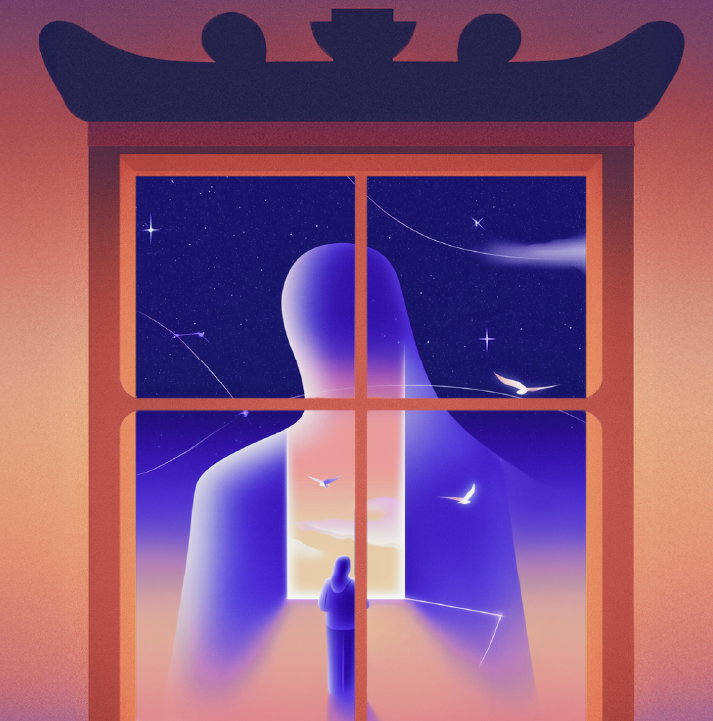
The future, however, is described as muri—behind us. We are said to walk backward into the future, unable to see it. What lies behind is not emptiness, but ngā uri whakatipu—our descendants. The future belongs to them, not to us.
Environment, Survival, and the Conditions of Futurity
Because the future is understood as the domain of those yet to be born, it is measured not only in time but in conditions. Māori ways of marking time are deeply environmental: the flowering of plants, the migration of birds, the ripening of fruit, the tides, the winds, the harvest. These are not symbolic markers but practical ones. They structure life itself.
This makes the health of the environment inseparable from the future. If waters are polluted, forests degraded, or food sources depleted, then the future does not merely become difficult—it becomes endangered. If time is defined by the people who will inhabit it, and by the resources that sustain them, then environmental destruction threatens the very possibility of that time arriving intact.
From this perspective, time cannot be owned or claimed in advance. It can only be occupied while one is alive. The future is never “ours.” It is always running just out of reach, belonging to generations whose names and faces we will never know.
Conclusion
The responsibility of the present, then, is not to secure the future for ourselves, but to prepare a place for those who will eventually stand where we cannot. The task is to care for the world they will inherit with the same attentiveness our ancestors showed to ours.
So when we ask, Where is the future? the Māori answer is not metaphorical. It is precise.The future is behind us—in the hands of our descendants.
original language
Kei hea te Apōpō? He aronga Māori
Ka whakamahia e mātou te kupu āpōpō mo te wā heke. I te nuinga o te wā, ko te whakamāramatanga o te kupu nei ko te rangi tonu e heke mai ana, ā koia tonu ko te niao o te wā heke e pātata tonu mai ana — te wāhanga kei tua tata tonu o te kaponga ringa o te wā tū. Ko tā te āpōpō he tohu i a tātou kia mahara, ahakoa e pātata mai ana tētahi wāhanga o te wā heke kia tāea e tātou te whakariterite mō tōna taenga mai, ko tōna nuinga he mea huna, he mea ka whakatinanatia e te hunga ka ora i roto i a ia i te wā ka whatungarongaro kē tātou.
Ka karangatia hoki e mātou te āpōpō ki te rerenga te wā heke – e mea nei hei te taka mai te wā ki runga i a tātou, he mea e kore e tāea te karo, he rite ki te aukume o te tō-ā-papa. He mea ka tae mai ahakoa e rite ana, kāore rānei. He āhua hoki tō te rerenga nei e kī ana ka haere mai te wā heke ki a tātou, ēhara i te mea ko tātou kē kei te haere ki a ia. Hei tauaro, ina kōrerotia te wā hipa me ō tātou maharatanga mōna, ka whakamahia ngā kupu pēnei i te tiki me te kapo — he kupu mahi e hāngai ana ki te kohinga, te tikinga me te puritanga. Nā konā, e whakaatu mai ana te reo i te āhua o tenei mea te maharatanga ki te wā hipa, he mea e āta mahia ana, me āta toro whakamua te tangata ki te tiki anō i ngā mea kua rere kē. Engari anō te wā heke, ka tae noa mai, ahakoa āta kimihia, kāore rānei.
I te ao Māori, ehara te wā i te mea rehurehu noa hei ine-ā-rārangi mā te karaka me te rātaka. He pā horanuku tonu nā te hunga ora – he wāhi e āta nōhia ana e te tangata. E whakapuaki ana tō mātou reo i tēnei aronga ki te ao. Ka kōrerotia e mātou te wā o ngā tūpuna hei wāhi kei mua i a tātou nātemea e mārama ana tā tātou titiro ki tērā wā. E hora ana te wā hipa ki te aroaro o te tangata, haumako ana i ngā oranga, ngā mahi, me ngā mahuetanga o te hunga i noho i aua wā.
Hei tauaro, ko te kupu mō te wā heke ko te muri — he kupu e whakamahi kētia ana mō te muri o te tangata. E ai te kōrero, kei te hīkoi whakamuri tātou ki te āpōpō, e kāpō ana ki ngā mea kei te haere mai. He hirahira te pikitia ka puta i tēnei whakatakotoranga reo: ehara te āpōpō i te wā more noa e tatari ana kia whakakīhia, koia kē ko te kāinga matakore o ngā uri whakatipu — ā mātou tukunga iho. Nō rātou, te hunga e kore pea e tūtakina e mātou, e kore tonu ō rātou kanohi me ō rātou reo e mōhiotia e mātou.
Ka ine te Māori i te wā mā ngā kaupeka me te taiao: te puāwaitanga o ngā momo tupu, te hekenga o ngā manu, te maoatanga mai o ngā huarākau, te hauhaketanga o ngā huakai, te puhinga o ngā momo hau me te terenga o ngā momo tai. He wāhi nui ēnei tūtohu māori ki tō mātou rātaka hei āta whakamārama i te manawataki o te koioranga. Engari ki te tupuheke te oranga o te taiao — ki te kore e tāea e ngā puna kai, ngā wai, ngā ngahere me ngā rangi ō tātou iwi te whāngai — kei te noho korehāhā tonu te āpōpō. Mehemea ko te whakamāramatanga o te āpōpō e aro kē ana ki te hunga e noho ana ki reira, ka mutu, mehemea he mea ine hoki mā ngā puna mahinga kai hei whāngai i a rātou, e whakatumatuma ana te aneatanga o te taiao i te pitomata e pua mai ai taua āpōpō.
Ki te Māori, me ora te tangata i te wā e kīa ai nōnā tērā wā, nā reira e kore e tāea te kī nō tātou te āpōpō, e oma kē ana i tua, kei tua i te toronga ringa, he kāinga kē mō ngā whakareanga kei te haere mai. Ko tā mātou i te wā tū nei he whakarite i te huarahi kei te aroaro — te ao ka mahue ki a rātou — ā, kia tae ana rātou ki tō rātou ake wā, ka kite rātou i āta tiakina e mātou te wāhi ki a rātou, pēnei i ō tātou tūpuna me ā rātou mahi ki te tiaki i te wāhi ki a tātou.
Nā reira kia uia te pātai, “Kei hea te Apōpō?” e mārama ana te whakautu Māori: kei muri i a tātou, kei roto i ngā ringa o ngā uri whakaheke.