Trends
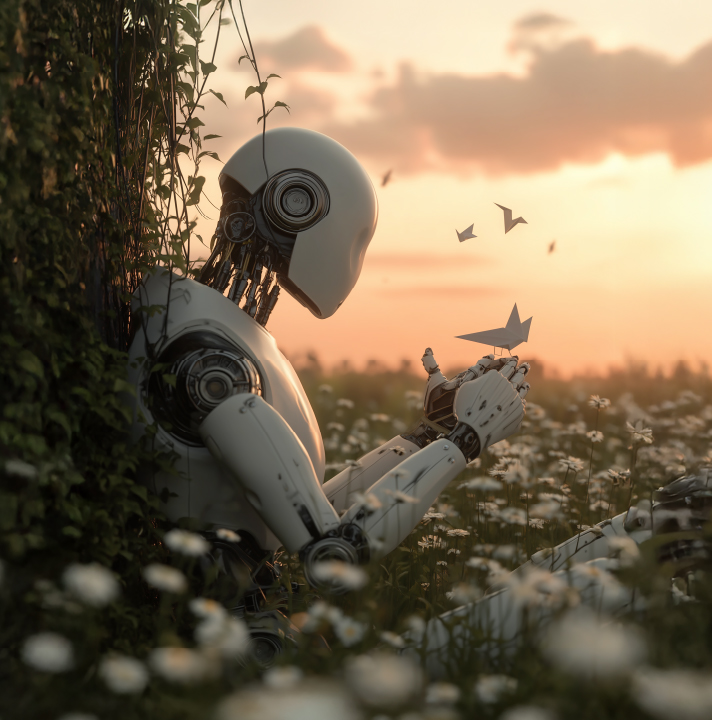
We are on the cusp of a seismic shift. With Experience in AI, artificial intelligence models learn not from knowledge recorded in the past, but directly from their own actions.
There is no doubt that the accomplishments of recent years have been spectacular. Thanks to language processing, machines have truly learned to reason, but this has left their ability to act somewhat limited.
In the coming years, though, a new disruptive leap in artificial intelligence is on its way: machines are coming of age, gaining their own experience, and remembering what they have learned from the past.
But they are going to act based on data from sensors that record what is happening in the environment around them. Artificial intelligence, embodied in robots or other machines, that reacts to contextual feedback and learns from everything it sees and hears, actually becomes much smarter. And its actions can reach a much greater level of autonomy than was possible in the past.
In the new landscape, humans must take responsibility for what machines will do when interacting with the environment. Humans have an obligation to direct what machines do so that it benefits humanity.
It will not be a path inspired by the now archaic idea of “humans in the loop” of artificial intelligence’s development, but an alignment that takes all of humanity as its reference point.
“Machines are coming of age, gaining their own experience, and remembering what they have learned from the past.”
The sheer power of this technology is likely to foster unprecedented wealth and prosperity. However, major problems will have to be addressed and solved. I have been involved in developing several written documents to propose the right way to design artificial intelligence. Thousands of scientists, entrepreneurs, and international ethical and intellectual authorities have put together their suggestions to define the principles of action necessary to move forward wisely. Even the Catholic Church and the United Nations have shown an interest in these papers, which aim to outline a fair future for digital technology, as the European Union has been doing since 2022.
In short, new awareness is emerging. Firstly, artificial intelligence can work the same way the aviation and pharmaceutical industries do: new products can be tested before they are put on the market, without stifling innovation. We cannot release superintelligence into the wider world without rigorous testing and without an extensive methodological consensus in the scientific community. Nor can it be launched without broad, informed, and deliberate acceptance among the public.
The other danger to manage is fundamentally economic. If adequate measures are not taken, there is a risk that this new AI will give rise to the greatest monopoly in history: a monopoly capable of learning from every single interaction with its audience in order to continually improve. Not merely a monopoly that abuses its dominance to capture adjacent markets, but one that will grow horizontally to take over absolutely everything. The amount of capital that has been invested to do precisely this is beyond our wildest imagination. It’s important to set out the rules of the game before playing it.

Imminent Research Report 2026
A journey through the next generation of AI —the moment when machines begin to learn from and interact with the real world in real time.
The ultimate resource for understanding the next phase of AI innovation. Written by a global, multidisciplinary community. Designed to navigate a world where machines mature, learn from experience, and retain memory—while humans remain responsible for how AI acts in the world, and language continues to be the primary way intelligence is created.
Get Your Copy NowThe Age of Experience in AI is still being built. There are technological leaps to make. New algorithms need to be designed. Many alternative systems are possible and necessary. But perhaps we also need regulators’ help to create two new antitrust rules:
1. If a company creates foundation models, it cannot make application models;
2. In the field of foundation models, nobody can own more than 25% of the market.
Underpinning these decisions, a look at history still has much to teach us about Experience in AI’s potential impact on society. Language remains humans’ primary way of creating intelligence. Language is the technology that has allowed us to evolve beyond other species. The beauty and richness of language remain the best way to make progress. Language is diverse. Cultures are different. Today, we are not only giving machines intelligence, but also the ability to feel: we’re giving them the senses to read reality, thereby strengthening their reasoning abilities. The diversity of languages and cultures will also give rise to different sensitivities, however, with forms of experience in AI adapted to different cultural environments.
Plural AI, for models that reflect the diversity between cultures, will make it easier to guard against monopolization: the idea that everybody will be both a user and a producer of these machines. After all, prosperity is not compatible with monopolies: the best way to use these models is for everybody to think about them in their own context, training them with knowledge and information that remains under users’ control and not centralized. Machines will coexist with humans and protect industrial property, cultural diversity, entrepreneurial freedom, and competition.
“Today, we are not only giving machines intelligence, but also the ability to feel: we’re giving them the senses to read reality, thereby strengthening their reasoning abilities.”
This vision would be perfectly compatible with a conception of artificial intelligence like the internet: AI that is a resource shared with all of humanity. The risk is that such a vision will lead to a situation where nobody has a single button that can switch everything off. But the risk of there being a single center of power that could push that button to serve its own interests, rather than those of humanity, is even greater. In the end, if everybody is a producer of AI, a balanced distribution of power becomes a crucial line of defense against abuse and will promote an AI ecosystem built on healthy economic and cultural foundations. The DVPS project contributes to this interpretation of artificial intelligence in the Age of Experience in AI. A vast consortium of Europe’s leading research centers has set itself the task of finding the best solutions to develop Experience in AI based on the best principles for the common good. Like any worthwhile project, it’s ambitious. But it’s being driven by a team that is firmly grounded in reality. Time will tell if DVPS can usher in the dawn of Experience in AI.
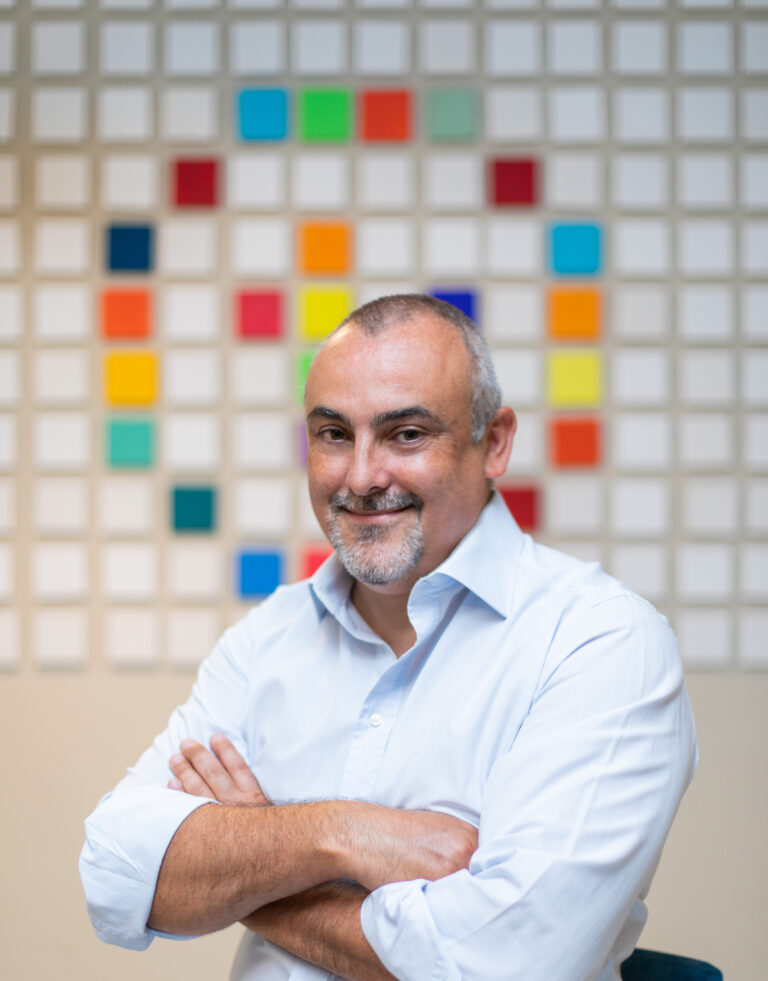
Marco Trombetti
Founder and Ceo of Translated
Marco Trombetti is a computer scientist, serial entrepreneur and investor. In 1999, together with his wife Isabelle Andrieu, he co-founded Translated, a translation service that pioneered the use of artificial intelligence to help professional translators. With the profits from these ventures, Marco co-founded Pi Campus, a venture capital firm that invests in early-stage technology startups, mostly in the AI field.