Language
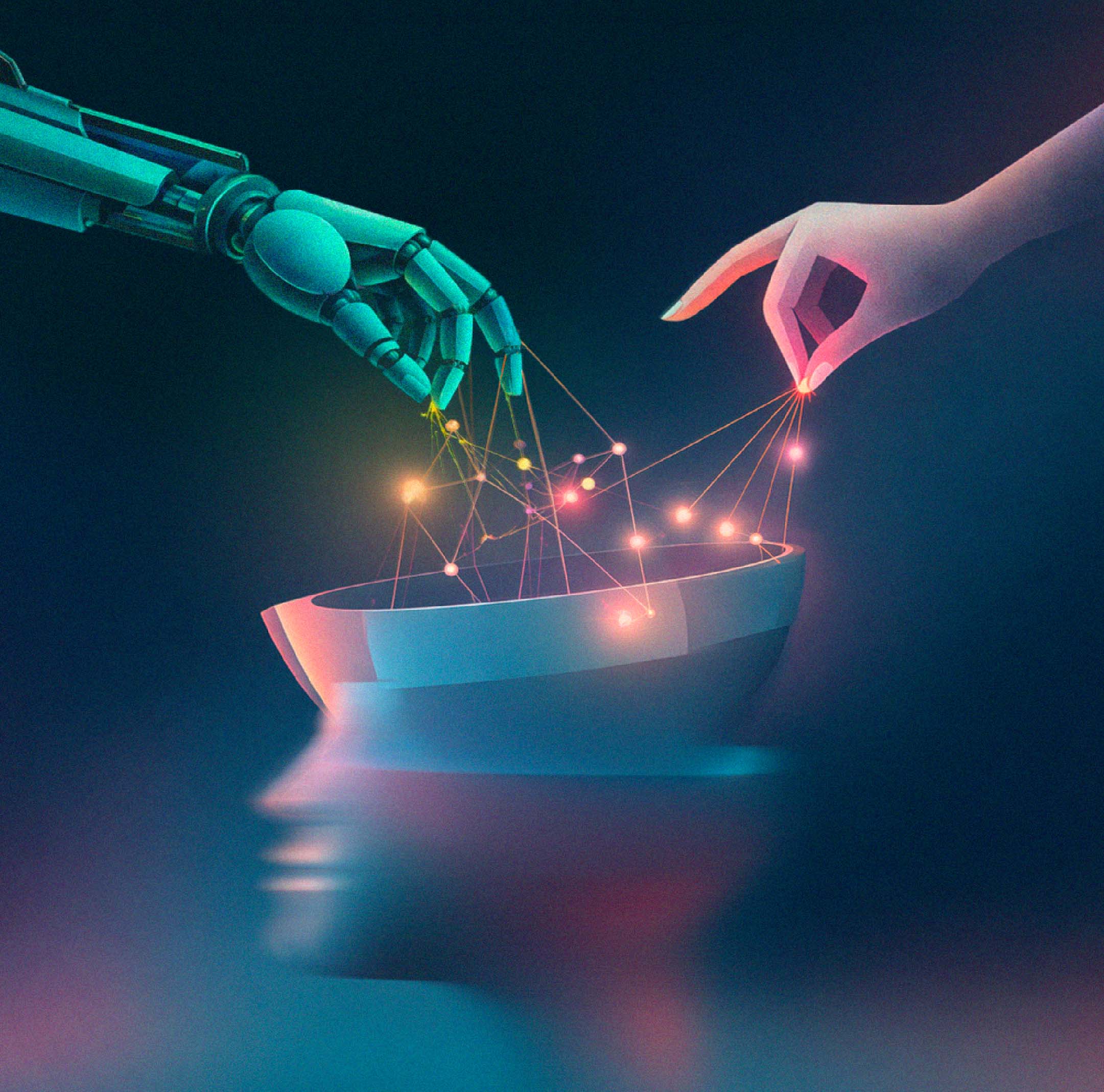
Generative AI did not arrive quietly. It pulled a technology out of its niche by giving everyone the same point of entry: language. No code, no manuals. Just words.
It happened fast — faster than any collective understanding could follow. And it happened privately. One conversation at a time, on our own devices, unseen and unshared. Each exchange feeding transformations that nobody was quite mapping yet.
At the same time, while we were each figuring out how to talk to the machine, something else was happening: we were collectively choosing how to talk about it. The words we reached for — beast, mind, parrot, agent — said more about our need to contain what we didn’t understand than about the technology itself.
And underneath both of these dynamics, a harder question: does sustained interaction with AI change the brain? Not metaphorically. Structurally.
With this series, Imminent brings together three practitioners — working across communication, linguistics, and neuroscience — to examine the relationship between language and artificial intelligence from three distinct angles. What emerges is something larger than the sum of its parts: a new dialogue in which the concepts of conversation, analogy, and brain are being redefined, opening perspectives we didn’t have the words for, until now.
To understand
How Do We Talk To AI
By Alberto Puliafito
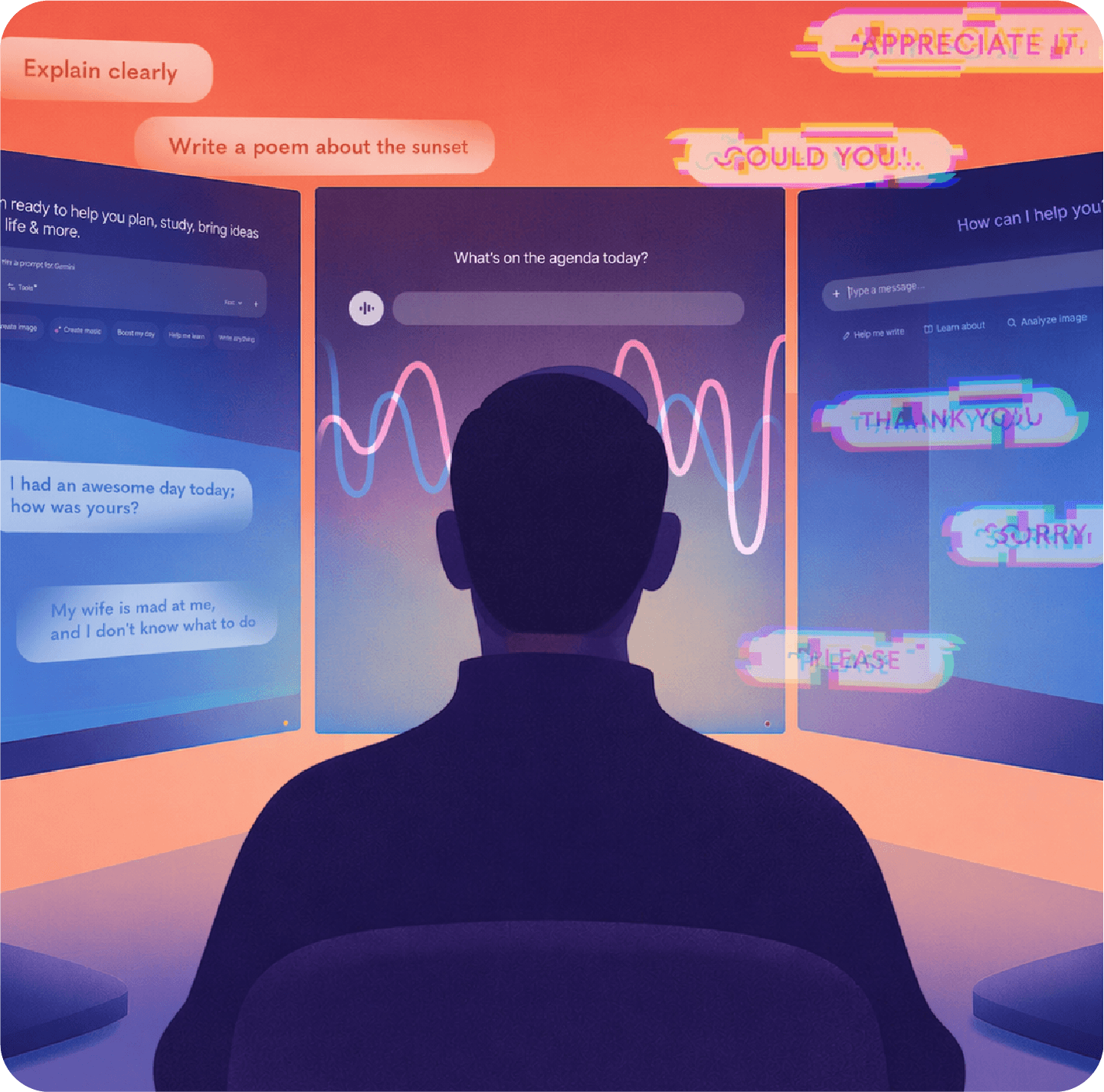
Drawing on the analysis of 50 conversations with chatbots, tech journalist Alberto Puliafito offers a window into how we engage with AI—and how these interactions are beginning to reshape both our relationships and our perception of the world.

How Do We Talk About AI
By Mafe de Baggis
Since AI entered our lives, we’ve struggled to name it. Through a semantic analysis, Mafe de Baggis shows that what seems like an obvious way of naming AI is in fact something very different, revealing more about us than about the technology itself.
Our Brain After Chat
By Martina Ardizzi
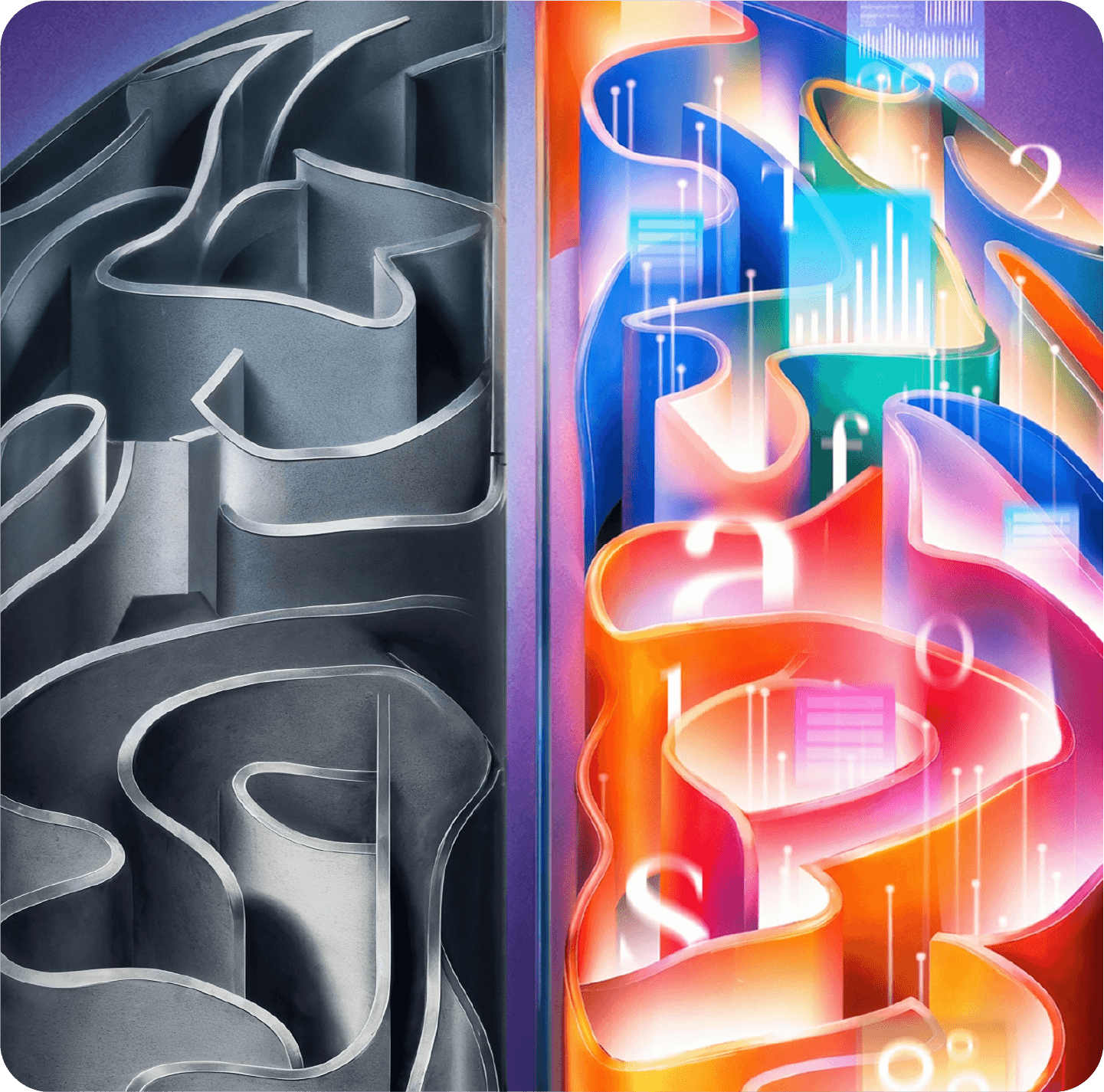
Every interaction with generative AI engages the brain’s linguistic, attentional, and social networks, blurring comprehension with the sense of dialogue. Martina Ardizzi offers a neuroscientific perspective on this encounter, framing it as a short-term response rather than long-term adaptation.