Education + AI, Trends
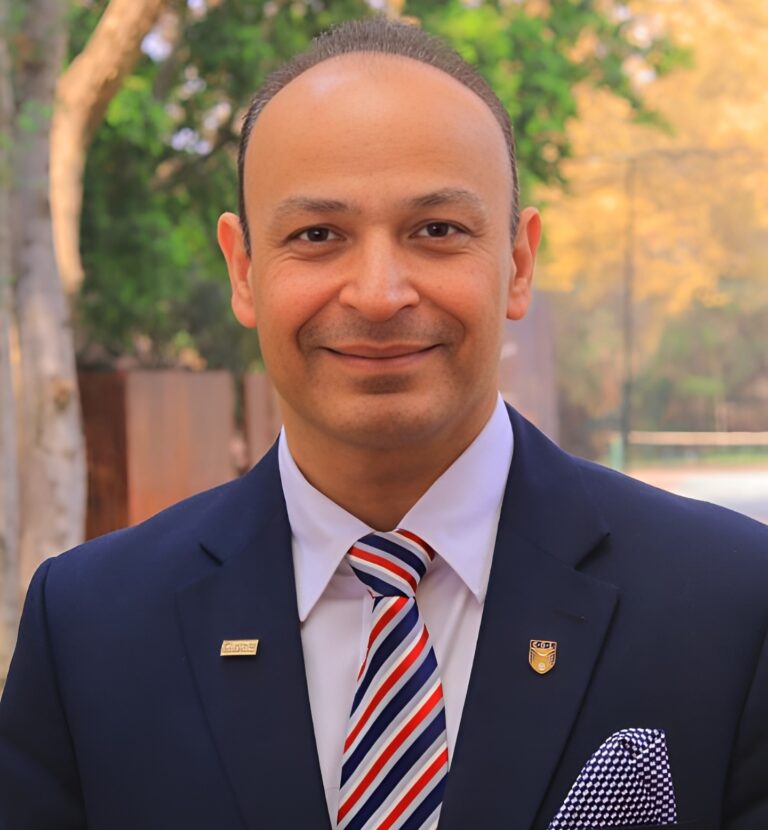
Adit Gupta
Principal and Professor at MIER College of Education
Prof. Adit Gupta is Principal of MIER College of Education (Autonomous), Jammu, and Director of the MIER Group of Institutions. He holds a PhD in Technology-Supported Learning Environments from Curtin University, Australia, and has over 28 years of experience in higher education leadership. He is Editor-in-Chief of the Web of Science-indexed journal, MJESTP, and a recipient of the Australian Government’s Endeavour Executive Award.
CHAPTER 2
The Language of Inclusion
The educational landscape: Diversity as both challenge and opportunity
India’s education system is among the largest and most complex in the world, serving over 300 million learners across 1.5 million schools and more than 50,000 higher education institutions. What makes this system uniquely challenging is not merely its scale but its extraordinary diversity. India recognizes 22 scheduled languages and has over 19,500 documented mother tongues. For millions of learners, particularly in rural, tribal, and geographically remote communities, the language of instruction is not the language of the home, the family, or the community. This disconnect has historically been one of the most persistent barriers to equitable learning outcomes, and one that conventional educational reform has struggled to resolve at scale.
The National Education Policy (NEP) 2020 marks a significant effort to address this challenge systematically. Focusing on mother-tongue instruction in the early years of schooling, competency-based learning progression, and the integration of technology at all levels of education, NEP 2020 has reshaped the priorities of Indian education and placed inclusion at the heart of its vision. However, the implementation of these goals remains inconsistent. Well-resourced urban institutions have quickly adopted new approaches, while rural and tribal schools continue to struggle with infrastructure deficits, severe teacher shortages, and limited access to quality learning materials in learners’ home languages. It is within this gap that artificial intelligence, used thoughtfully, has genuine potential for transformation.
India’s education system is among the largest and most complex in the world, serving over 300 million learners across 1.5 million schools and more than 50,000 higher education institutions.
Language technologies and the inclusion imperative
The most compelling application of AI in the Indian educational context may not lie in administrative efficiency or generic content generation, but in language. India’s linguistic diversity is immense, and the challenge of providing quality education in multiple mother tongues has historically been a major resource and infrastructure problem. There are simply not enough trained teachers, textbooks, or learning materials in Dogri, Santali, Bodo, Kokborok, or Konkani, to name only a few of India’s scheduled languages. Tribal and linguistically minority communities have for generations received education in languages that are not their own, with significant consequences for understanding, retention, and educational achievement.
AI-powered language technologies are starting to reshape this issue. The Indian government’s BHASHINI initiative (National Language Translation Mission), launched in 2022, marks a significant national effort to overcome language barriers through AI-driven translation and speech technologies (Ministry of Electronics and Information Technology, 2022). BHASHINI has already been integrated into platforms such as the e-Shram portal, AICTE’s educational resources, and UGC systems, providing content in all 22 scheduled languages. Automatic speech-recognition systems are being developed and improved for Indian regional languages, allowing voice-based interaction for learners who are not yet confident readers. Neural machine translation tools are used to produce initial drafts of educational materials that human educators can review, correct, and contextualize.
India’s linguistic diversity is immense, and the challenge of providing quality education in multiple mother tongues has historically been a major resource and infrastructure problem.
Complementing this government initiative is the work of AI4Bharat, a research laboratory at IIT Madras supported by the Nilekani Centre. AI4Bharat has developed IndicVoices, a groundbreaking 12,000-hour multilingual speech dataset covering 22 Indian languages and 208 districts, and IndicASR, the first automatic speech-recognition model supporting all 22 officially scheduled languages (AI4Bharat, 2025). These are open-source resources, freely available to educational institutions, researchers, and technology developers. The NPTEL and SWAYAM platforms, India’s flagship initiatives for technology-enhanced learning, are actively using these AI translation tools to provide technical education courses in 11 Indian languages, specifically targeting students in rural areas who have completed their schooling in regional languages (All India Council for Technical Education, 2020).
These are not hypothetical futures; they are current-day realities being tested in institutions across India, including in teacher education settings where training educators to use these tools is now recognized as a professional development priority. For teacher educators, the message is both urgent and practical. A teacher working in a tribal school in Jharkhand or a remote area of Arunachal Pradesh needs to know how to use an AI translation tool to support instruction in a language with no formal materials, how to assess the accuracy of machine-generated content in their students’ home language, and how to use text-to-speech tools to aid students who are not yet fluent readers. These are tangible professional skills, and integrating them into initial teacher education and ongoing professional development programs is a vital step toward achieving the inclusion goals of NEP 2020.
Challenges and honest limitations
It would be misleading to portray AI integration in Indian education as simply successful or universally beneficial. Several challenges merit honest recognition. First, access remains deeply and structurally unequal. The teachers and institutions most likely to adopt AI tools are those that already have reliable internet, functional devices, technologically literate staff, and an institutional culture that supports experimentation. Schools in the most underserved communities often lack all of these prerequisites. Without intentional equity planning, AI risks widening educational gaps as much as it could narrow them.
These are not hypothetical futures; they are current-day realities being tested in institutions across India.
Secondly, the quality of language models for low-resource Indian languages remains a significant challenge. Most widely available AI tools are built on large language models trained mainly on data in English. Their effectiveness in languages such as Santali, Manipuri, Meitei, or Sindhi is often inconsistent, and there is a genuine risk of generating content that is incorrect, culturally inappropriate, or linguistically incoherent. Educators using these tools need sufficient linguistic expertise to identify errors before they reach learners, which creates a difficult paradox: The communities most in need of linguistic support are often those whose teachers are least equipped to verify AI outputs in the relevant language.
Third, there is a genuine risk of uncritical adoption. The enthusiasm for AI in education can cause institutions to implement tools without sufficient pedagogical justification, proper teacher preparation, or a clear understanding of the learning outcomes these tools are meant to support. Research conducted at MIER using validated psychometric instruments revealed that, although attitudes toward AI were generally positive among teacher educators, self-efficacy in using AI tools for specific pedagogical purposes was significantly lower than overall enthusiasm might suggest. Enthusiasm is not the same as readiness, and deployment does not equal integration.
Looking forward
India’s ambition for inclusive, equitable, and high-quality education, as outlined in NEP 2020, is attainable. AI provides genuine and practical tools to support this ambition, especially in areas like language accessibility, personalized learning, and teacher capacity development. However, realizing this potential demands sustained investment in three typically underfunded areas: digital infrastructure in underserved regions, teacher-training programs that develop AI skills alongside pedagogical abilities, and the creation of AI language tools trained on, and truly responsive to, India’s rich linguistic and cultural diversity.
The communities most in need of linguistic support are often those whose teachers are least equipped to verify AI outputs in the relevant language.
For institutions like MIER College of Education, the task ahead is clear: continue developing AI competency frameworks that are practical, rooted in classroom realities, and accessible to teachers regardless of their prior technical experience; prepare teacher educators who can critically and confidently utilise AI tools in ways that benefit their learners; and advocate strongly for the development of language technologies that prioritize India’s most linguistically marginalized communities rather than treating them as afterthoughts. Inclusion through AI is ultimately not a technological project. It is a pedagogical, social, and political endeavor that demands the sustained commitment of educators, researchers, policymakers, and technology developers working in genuine partnership.
regional insight
Perspective from MIER College of Education (Autonomous)
Integrating AI into the educational ecosystem
At MIER College of Education (Autonomous) in Jammu, the integration of AI has been part of a broader Technology-Enabled Learning (TEL) transformation that commenced in 2021, developed through sustained partnership with the Commonwealth of Learning. This was not primarily a technology deployment project; it was a pedagogical redesign initiative. Over three carefully sequenced phases, 135 faculty members were trained and supported to redesign their courses using blended learning principles, with 20 courses formally transitioned to blended delivery. By 2024, the institution had achieved a TEL benchmarking score of 4.1 out of 5 across ten domains including IT support, leadership, and policy development, received national recognition for digital education excellence, and observed measurable improvements in both student performance and engagement across participating programs.
What made this transformation effective was not the introduction of any single tool but the systematic alignment of technology with learning design. AI-powered tools were used to provide personalized feedback, generate content in different formats and at varying levels of complexity, and enable students to engage with learning materials at their own pace and in ways that suit their learning preferences. Faculty used generative AI to develop multilingual resource summaries, making it easier for first-generation learners, many of whom were navigating English-medium instruction for the first time, to access and meaningfully process course content. The emphasis throughout was on teacher agency: AI was positioned as a resource that educators could use critically and creatively, rather than as a system that would determine how teaching should happen.
The AI interaction knowledge (AIK) framework
Parallel to this institutional transformation, a comprehensive AI policy framework was developed in collaboration with the Commonwealth of Learning. The policy clarified governance structures with designated responsibilities across the Centre for Educational Technology, the ICT Unit, and academic leadership. It established an approved tools registry to guide faculty and student choices, defined transparent disclosure requirements for AI-assisted work, aligned data protection provisions with national standards, and introduced mechanisms for ethics support, monitoring, and regular review. Additionally, a student-facing AI literacy course was introduced to address academic integrity concerns proactively, ensuring learners understood both the capabilities and limitations of AI tools and could use them responsibly in their academic work.
It aims to lessen the time and resource burdens on teachers who are already stretched beyond reasonable limits.
This institutional work contributed to the development of the AI Interaction Knowledge (AIK) framework, designed as a practical supplement to the well-established TPACK model of technological pedagogical content knowledge. The AIK framework provides teacher educators with a clear vocabulary for understanding how to incorporate AI tools in ways that are pedagogically sound, contextually suitable, and genuinely attentive to learners’ needs. It has been presented at international forums, including the 12th International Conference on Science, Mathematics and Technology Education in China and at the Sarvajana AI Summit, Model Institute of Engineering and Technology, Jammu. The framework is deliberately non-prescriptive; it encourages educators to critically evaluate which AI tools are appropriate for specific learning contexts and to develop the professional confidence to make those judgments independently.
Voices from the classroom
Teachers who have used AI tools in their practice discuss both the real potential of these technologies and the learning curve that comes with adopting them. One faculty member who took part in MIER’s TEL transformation program reflected on how AI had transformed her daily teaching preparation.
These reflections highlight an important point: The value of AI in inclusive education is not about replacing human judgment or reducing the teacher’s role. Instead, it aims to lessen the time and resource burdens on teachers who are already stretched beyond reasonable limits, allowing them to do more and to do it more thoughtfully for a wider range of learners.
Institutional survey data from MIER’s baseline assessment showed that students consistently viewed AI as providing immediate assistance that complements classroom learning, boosting their confidence, especially when working on English-medium assignments. Many reported that AI served as a readily available resource that clarified concepts, supported independent learning, and helped them refine their academic writing in ways that enhanced rather than diminished their capabilities.

AI has transformed how I prepare for class. What used to take me two hours of searching through materials now takes 20 minutes. But the real difference is with my weaker students. I can now create simpler explanations, and they actually understand concepts they used to struggle with.

— Teacher educator, MIER College of Education
Another participant, working in a multilingual classroom where students come from Kashmiri-, Dogri-, and Hindi-speaking homes, described the practical value of AI translation support:
Initially, I was skeptical about whether AI would succeed in our multilingual setting. However, when I used translation tools to develop study materials in simpler language for my students, many of whom are first-generation learners, I noticed a clear increase in their engagement. This is exactly what we have been needing.
— Teacher educator, multilingual classroom context, Jammu