Language
From July’s issue of Global Perspective
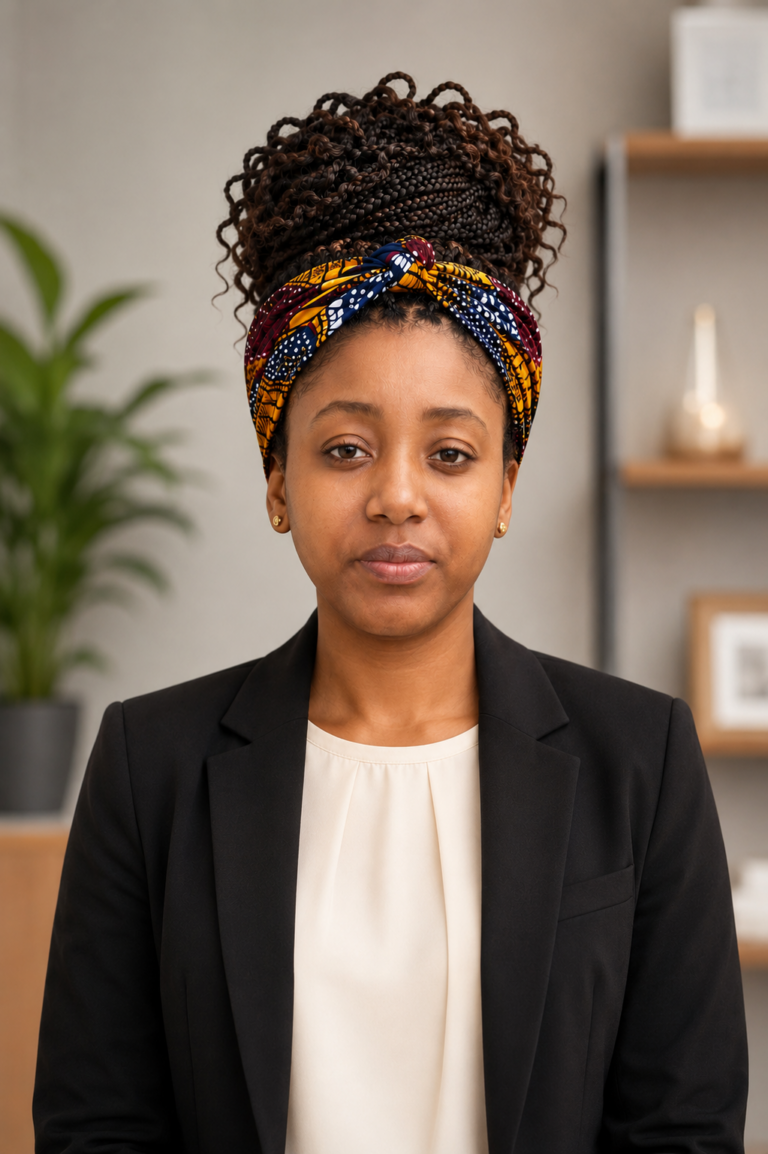
Peris William
Localization Specialist and Copywriter
Peris William is a Swahili (Ke) localization specialist and copywriter with extensive experience helping global brands communicate naturally and effectively with East African audiences. Her expertise spans localization, transcreation, linguistic quality assurance, and culturally nuanced copywriting. Passionate about language, clarity, and user experience, Peris combines linguistic precision with strategic thinking to create content that resonates.
Swahili is exceptionally unique in that it showcases how ordinary people created a language so perfect and flexible that it united diverse communities without erasing their identities, particularly in East Africa. There are hundreds of different languages and dialects across the region, and yet almost everyone speaks Swahili as a second language.
With over 150 million speakers across Africa and recognized as an official language in five countries, it has become the connective tissue of an extraordinarily diverse region. And yet no single community can claim it as their own. That neutrality is not a weakness—it is precisely the source of Swahili’s power.
A Language Built by Encounter
Swahili did not emerge from a single community or a deliberate design. It grew from contact—centuries of it—along the East African coast, where Indian Ocean trade brought together Bantu communities, Arab merchants, Portuguese colonizers, Indian laborers, and Persian traders, each carrying their own language into a space that required a shared one.
What emerged was not a compromise but a synthesis: a language with a stable Bantu grammatical structure that absorbed vocabulary from every direction, bending borrowed words to fit its own phonological logic without losing its coherence.
A Multicultural Vocabulary
The traces of those centuries of encounter are still audible today. Swahili’s vocabulary is a living record of every community that passed through the East African coast—and of how thoroughly it absorbed each one.
| Language | Words |
| Arabic | Sawahili (Swahili), mwalimu (teacher), karibu (welcome), sukari (sugar), dunia (world), alhamisi (Thursday), habibi (my love), jirani (neighbor), tajiri (wealthy person), kartasi (paper), safari (journey), kahawa (coffee) |
| Hindu | chai (tea), pesa (money), duka (shop), kazi (work), bima (insurance) |
| English | shule (school), baiskeli (bicycle), benki (bank), hospitali (hospital), koti (coat), polisi (police), bia (beer), redio (radio), shati (shirt) |
| Portuguese | meza (table), leso (traditional printed cloth piece), gereza (prison), bendera (flag), divai (wine), kopo (tin), pesa (money), and nanasi (pineapple) |
Today, these words do not sound foreign in a Swahili sentence. In some cases, words were phonologically bent to fit the language’s grammar: shule from school, benki from bank, koti from coat. The original is still audible, but the word has been remade. That process of absorption and adaptation is not incidental to Swahili—it is its defining characteristic, and the clearest demonstration of its flexibility.
Swahili as a Language of Decolonization
When Kenya and Tanzania achieved independence, the question of language was also a question of power. Colonial governments had governed through English—a language that kept access to education, administration, and political participation concentrated in the hands of those who spoke it. The deliberate elevation of Swahili as a national language was, in this context, a political act with profound consequences.
In Tanzania, President Julius Nyerere made Swahili the language of instruction in schools and oversaw the translation of foreign literature into it, ensuring that knowledge was no longer gated behind a colonial language.
In Kenya, Swahili’s adoption as a national language was driven by a different but related logic: its neutrality. Unlike English, it carried no colonial authority. Unlike any local dialect, it belonged to no single ethnic group. It could therefore serve as a language of governance that no community experienced as an imposition.
That capacity—to remain forever open, forever unfinished—may be the closest any language comes to perfection.
Swahili’s neutrality, penetration, and acceptance meant that all ethnic groups within the nation’s borders could now be governed easily, and this had major political implications where, for the first time, a local language could shape political participation across the region.
Linguistic Strategies for Navigating Diversity
In a multilingual East African community, each language is associated with a particular social domain. No language is considered superior to another. Rather, they all work together to push one agenda: cohesive communication. Code-switching is a common element here, and when used in a sentence, Swahili often comes in as the backbone upon which the conversation is based.
Consider this sentence, ordinary in Nairobi:
“Leo pastor alikuwa na sermon moto sana. Can’t wait kwenda fellowship baadaye leo kumsikiza zaidi.”
| Word | Meaning in English | Language |
| Leo | Today | Swahili |
| Pastor | – | English |
| Alikuwa na | He had | Swahili |
| Sermon | – | English |
| Moto | Amazing – Sheng (in this context. In normal context, moto means fire) | Swahili |
| Sana | Swahili for ‘much’. However, in this context, it combines with Moto to describe how the sermon was ‘Very Amazing’ | Swahili |
| Can’t wait | – | English |
| Kwenda | To go | Swahili |
| Fellowship | – | English |
| Baadaye leo Kumsikiza zaidi | Later today to listen to him further | Swahili |
In this example, Swahili serves as a cohesion factor, locking the more formal English words into one smooth sentence rather than trying to outdo the others. The speaker could have replaced every English word with a Swahili equivalent, but rather than producing awkward alternatives, they relied on Swahili’s ability to fill lexical gaps while maintaining the natural flow and rhythm of the conversation.
This is not an exception but a structural feature of how language works across the region. In East Africa, Swahili is generally used as the language of social cohesion precisely because of its neutrality—unlike local dialects, which bring together only people of the same ethnicity, it serves as a bridge across communities. English remains more formal, associated with institutional and professional settings, while Sheng functions as the language of young people in urban Kenya. Swahili moves fluidly between all of them, holding the register together without collapsing it.
Swahili’s use among different people from different ethnic groups ensures that no one is forced to surrender their linguistic ethnicity or rely on someone else’s. That fluidity extends to the negotiation of power. When a citizen enters a government office and is greeted in English—“Hello, how may I help you?”—the formality creates distance. The same greeting in Swahili—“Habari, nikusaidie vipi?”—collapses it. The words mean the same thing; the social register does not. Swahili, precisely because it belongs to everyone equally, levels the ground on which those interactions take place.
An Unfinished Language
Swahili is an unfinished language—and perhaps that is what makes it perfect. Being unfinished means that Swahili has the capacity and depth to accommodate new words, new people, and adapt to whatever linguistic circumstance it finds itself in. It does not have perfect grammar, as seen from the adoption of phonologically bent words into the language. It does not have a perfect, original vocabulary—rather, it has borrowed heavily from other languages over time, depending on the interactions that shaped it.
Swahili retains neutrality, and perhaps this is the single element that makes it a powerful language. No one can claim to be its original speakers. For this reason, its social cohesion aspect is maintained: Everyone can converse in Swahili without worrying about the dilution of their respective ethnic languages and profiles. To create cohesion in fragmented societies, Swahili does not demand that its speakers be the same or speak the same language. It simply fits within whatever context it finds itself and adapts with time. As relationships grow, so does the language, borrowing from others to create a vocabulary that flows naturally. That capacity—to remain forever open, forever unfinished—may be the closest any language comes to perfection.