Trends
Imagine a world in which those who make artificial intelligence are themselves supported and guided by their own creation and by the complex ecosystem in which it develops. It can feel like a hall of mirrors. Who or what is leading the generation of generative AI? What role does design play in the development of artificial intelligence? And what lies at the frontier of this innovative process? The responsibilities, vision, and quality of the human role in AI development also depend on the answers to those questions.
Imminent asked Don Norman to help address these strategic issues.
Don Norman
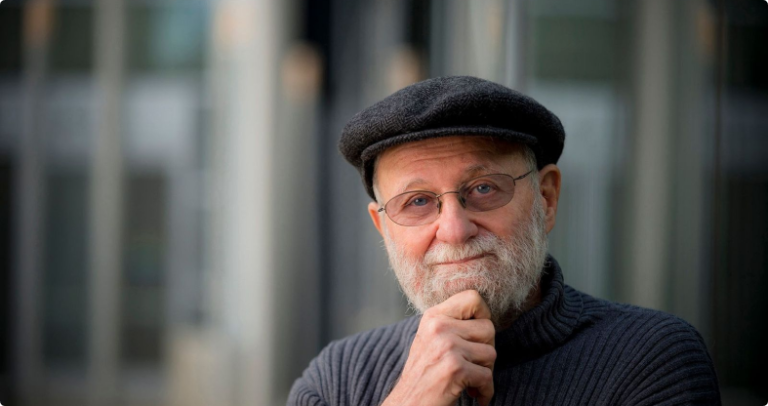
Don Norman is an American scholar, educator, and writer. He is a distinguished professor (retired) at the University of California, San Diego, where he served as chair of the Psychology Department, founder and first chair of the Cognitive Science Department, and founder of the Design Lab. He was also VP at Apple, co-founded the Nielsen Norman group, and has received numerous awards and three honorary degrees. A strong advocate of human-centered design (HCD), Norman has influenced the discipline by inspiring and mentoring generations of designers. He has published 21 books, most notably "The Design of Everyday Things", "Emotional Design", and his latest, "Design for a Better World: Meaningful, Sustainable, Humanity Centered." He now helps run a nonprofit charity, the Don Norman Design Award and Summit, championing and rewarding those practicing HCD.
What is your take on the idea that AI in many forms—LLMs combined with robotics and other non-LLM systems—will outperform humans at every task, even though these systems work very differently from human cognition?
Today’s artificial intelligences are still very new, they are not fully understood, including by the very people who develop and make them. People are starting to do neural science experiments on the machines- using the same techniques that we use for studying brains. So I will give you my opinions today, and I will tell you that these opinions are the most accurate that I can make today, but that doesn’t mean that in the future I will not change them.
Okay. Let’s start from what you think now. What is your approach?
I think in terms of evolution. Biologists have shown that every living thing is engaged in some form of computation. Intelligence is everywhere. Living beings are constantly searching for the resources they need. To understand how this works, use one of my most important design concepts: affordance (borrowed from a friend, a perceptual psychologist, who originated the term. An affordance is a relationship between an organism and the environment, covering all activities that the affordance provides for each particular organism. Darwinian evolution optimizes organisms within the niche of potential behaviors given by their affordances. Every so often, however, an organism enters an entire new space–a space of new affordances. This can mark a rapid change in organisms, and once the new space is entered, Darwinian evolution takes over. Entering this new space of opportunities creates evolutionary leaps.
We can use this evolutionary approach to think about artificial intelligence. Neural networks evolve in a way that is somewhat similar to what happens in biology. They build on known components and create new things; meanwhile, their internal networks find new patterns of behavior and interpretation, opening up new possibilities. Soon they will inhabit the bodies of robots, opening up new affordances and opportunities.
So, where is evolution going at present?
Let’s go back to the first question. Will AI be able to do all the tasks that people can do? Right now, AI is just a thinking machine, but it’s starting to get agency. And in fact, the next step is to put it inside a robot body where it can move around and manipulate the world.
Yes, these devices will be capable of all the things that people do, but don’t forget the A in AI: They are artificial. They do not have emotions (although they can frame them). Emotions and cognition are essential to human behavior: they are two different processing structures, but without both, people have difficulty in living within the world. The fact that they think, perceive, and behave differently than people is the clue to their future. They are not tools: they will be collaborators. Sometimes they’ll do things well enough that they will replace people, but overall I believe they will unleash a torrent of creativity, where people collaborate with an AI and do things neither could have done alone. I embrace the future as a wonderful extension of human life. For this to happen will take time: all new technologies take decades before their full potential is realized.
Do I fear misuse? Yes. We have to stop the mad rush to build bigger and more expensive systems just because we can. Instead, we must slow down and ensure we do create them as positive collaborators, not as destroyers of humanity.
What will be the role of design?
Design is almost anything we do to deliberately modify the world or our behavior in a way that we think will be beneficial. With AIs we designed something that’s a drastically new kind of life: a machine that thinks.
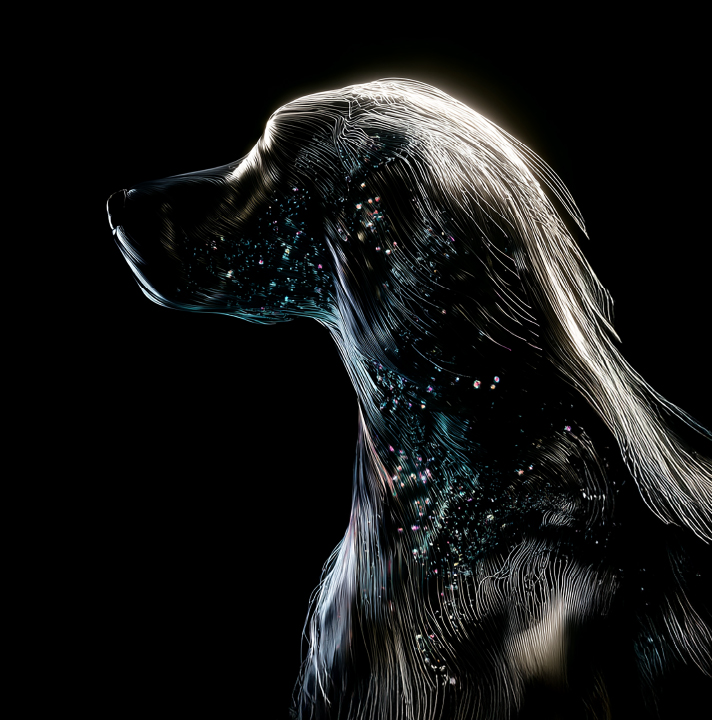
How do we design them? Well, there actually is a good example in the history of humankind in how we helped change the evolution of thinking animals, animals that used to think by themselves. An example? The breeding of dogs, where some behaviors were carefully selected by human breeders, others were discouraged. As a result, we now have a multitude of breeds, each specialized for some purpose… Dogs are artificial because the natural animals were carefully selected by people and trained. We have evolved a whole set of species of dogs, from tiny little dogs that you can carry around to huge dogs that are capable of doing useful tasks. The same happened with horses, some bred for intelligence, some for strength or speed, some for docility.
We can evolve AIs the same way, selecting those that are useful for very different tasks. Some will be useful for drawing cartoons, summarizing documents, and writing basic computer code. Others will be useful for loading and unloading dishwashers, cooking, housekeeping, and perhaps care for patients and children. This is not an advocacy of machines over people for these tasks, but the machines can do some of the drudgery, they can be available at all hours of the day and night. This allows parents and people in general to be able to spend more quality time with their children and colleagues, more time doing what people are good at: creativity with empathy, deep understanding of humanity.
In this new domain, the STEM fields of education will still be important, but it is the humanities, the arts, and the social sciences that will increase in relevance, and therefore power and influence.
In other words, we are going to develop new species.
Is there a method for the designer of artificial intelligence?
I’m always watching people and their behavior and beliefs: even my own behavior and beliefs. I’m always curious. And I find opportunities to do things better, which is what I believe design ought to be about: not making just things more beautiful but doing things that enhance the quality of life for everyone. AIs will give me a new range of opportunities to look at, to do things better, or differently, or in a more interesting way. When I write books, I don’t try to be better: I try to be different, to cause people to think, to view the world differently than they did before. Take my suggestion that enhancing AI is a bit like breeding animals and plants. It is different. And it was only born today, talking to you.
What kind of social innovation do we need to live through this transformation? Machines that have cognitive abilities will push humans to improve themselves.
We are now talking about education. I’ll tell you that I am an opponent of STEM education. Okay, STEM is science, technology, engineering, mathematics, right? And I’m highly trained in all four of those fields. So why am I against it? Well, because I design things for people, and there’s nothing about people in STEM. Take a look at the problems of today’s generative AIs: biases, prejudices, disinformation that social networks are spreading around the world. Why have they been so disrupted? Think of the affordances that the internet has provided, that the spread of computation across the world, often in easy-to-use, inexpensive smartphones. Affordances for both positive and negative behavior, unleashed sometimes purposively, sometimes unknowingly by technologists. We need the humanities. We need people who understand history and ethics and philosophy and the social sciences. We need people who understand humanity. People who work with technologists can change affordances in a way that encourages enhancement of life.
We now have a different kind of intelligent being. How it develops is up to us. It can be a powerful, positive collaborator for the good of humanity, for the good of the planet. Or it could lead to harm. Neither path is inevitable: which path we take will develop through our actions.