
Language
A script is more than a code for sound. It is a visual border that shapes how language is seen, archived, standardized, and ultimately valued. To choose a script, or to abandon one, is rarely a neutral technical decision.
The philosophical tension at the heart of script politics is one of efficiency versus identity. A globalized world is gravitating toward fewer scripts for interoperability, yet each script encodes a unique worldview. A change in script is never purely about aesthetics; it is a fundamental shift in how a culture is read and understood. It is an act of alignment that is political, cultural, and increasingly technological.
For the past fifteen years, my work as a type designer and researcher has centered on a script from coastal South India known as Tulu or Tigalari. It is widely described as the “lost script” of the Tulu language. Yet the deeper I researched its history, the more this narrative revealed itself to be a modern construction shaped by colonial philology and contemporary identity politics.
This tension becomes clearer when we look more closely at the linguistic ecology in which Tulu exists. The language is spoken by roughly two million people in Karnataka and northern Kerala, and its speakers have long navigated multiple scripts, using Kannada for administration and Nandinagari or Tulu-Tigalari for Sanskrit scholarship. At the same time, Tulu has historically been overwhelmingly oral. Its rich ritual epics, the most prominent among them known as paddanas, are performed during spirit-possession ceremonies and carry cosmology, ethics, and collective memory across generations without dependence on manuscript culture.
A script is more than a code for sound. It is a visual border that shapes how language is seen, archived, standardized, and ultimately valued.
It is precisely this coexistence of orality and script plurality that unsettles modern assumptions about what a language should look like. In the nineteenth century, European missionary linguists approached language through the lens of text. Figures like Robert Caldwell, who formalized the Dravidian language family, operated on the belief that philology required manuscripts and that literary corpora signified civilization: languages without substantial written archives were difficult to classify.
This assumption reveals more about the values of the observers than the observed. Precolonial South India did not operate on a rigid one-language–one-script model. Scripts and languages circulated fluidly across political boundaries. Orality was not an absence; it was infrastructure. The privilege of written language intensified under colonial administration and zealous missionaries. Censuses, educational policy, and legal codification required standardized orthographies to make languages governable. Over time, inscription became equated with legitimacy, reshaping how languages were recognized, classified, and governed.
This dynamic was not unique to India. Script reforms worldwide illustrate how writing systems function as instruments of power. In 1928, Mustafa Kemal Atatürk replaced the Arabic-based Ottoman Turkish script with a Latin alphabet to signal a turn toward secular nationalism. Vietnam’s Quốc Ngữ later became a nationalist tool that expanded literacy while displacing elite traditions. Kazakhstan’s current transition from Cyrillic to Latin reflects a similar geopolitical repositioning toward global integration. In each case, script is symbolic capital.
Technology has further privileged certain scripts structurally. The printing press was designed for the Latin alphabet, producing in many languages a drive toward simplification. The typewriter further constrained these scripts, and later telegraphy often relied on Roman transliteration.
As we look toward present times, the script wars are moving into digital infrastructures. Digital ecosystems remain structurally optimized for English and other high-resource languages. Search engines and large language models depend on vast digital corpora that minority oral languages rarely possess. Unicode has transformed this landscape by providing a universal encoding standard. Yet, encoding also abstracts script into discrete code points, translating calligraphic traditions into computational logic. The question is no longer which alphabet a nation adopts, but which scripts algorithms prioritize and which communities are rendered searchable.
Future linguistic justice will depend on building technologies that allow every language to inhabit the digital world without surrendering its depth.
Ultimately, a script is the skin of a language. Changing it reshapes how the world sees a speaker and how a speaker sees themselves. But beneath that skin, language remains breath and memory. A lively community ensures the longevity of a language far better than a script ever could. Future linguistic justice will depend on building technologies that allow every language to inhabit the digital world without surrendering its depth.
In the end, sovereignty is not only political. It is structural.
It is within this framework that the following cases unfold: the adoption of the Latin alphabet in Türkiye, Vietnam, Malta, and Kazakhstan, each revealing how script becomes a site of negotiation between power, identity, and global integration.
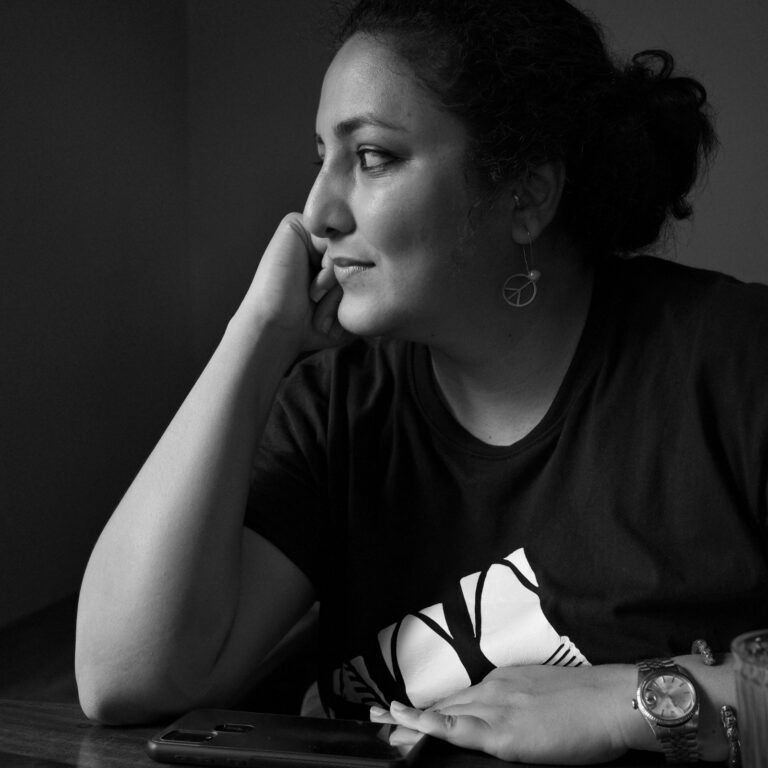
Vaishnavi Murthy Yerkadithaya
Creative Type Director
With over two decades of experience in brand strategy, UX, and Indic type design, Vaishnavi Murthy Yerkadithaya explores the continuum of visual communication. Now Creative Type Director at Monotype, she leads multi‑script typeface projects for global clients. An alumna of NID and the University of Reading (Felix Scholar), her work bridges tradition and technology. From digitizing palm‑leaf manuscripts to advancing the Unicode proposal for Tulu‑Tigalari. Ensuring design and languages in India thrive in the shifting landscapes of human memory.