Education + AI, Trends
CHAPTER 1
Between the Architect and the Oracle
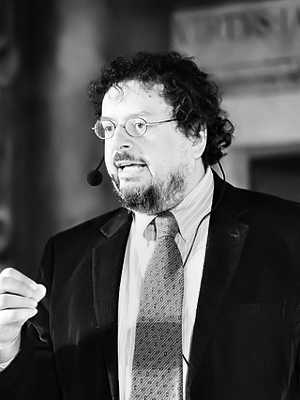
Gino Roncaglia
Associate Professor at Roma Tre University
Gino Roncaglia is Associate Professor at Roma Tre University, teaching Digital Publishing and Digital Humanities. An expert on new media, the future of books, and educational technology, he contributed to the Italian National Plan for Digital Education and collaborates with RAI Cultura. He is part of the Italian Horizon 2020 expert group, served on MIBACT’s cultural institutions committee, and is Honorary Professor at Universidad Nacional de Villa María.
Imminent: How you’d define intelligence and learning in the age of GenAI? And how do these concepts differ from—or intertwine with—traditional idea of intelligence?
Gino Roncaglia: Defining knowledge, intelligence, and learning is an enormous undertaking: There are hundreds of different definitions, tied to various schools of thought. I tend to favor operational definitions—ones that help us to distinguish, recognize, and ascribe qualities. In this sense, I draw on a tradition that goes back to Alan Turing: Instead of debating what intelligence is in a theoretical or almost metaphysical way, it’s more useful to ask ourselves in which situations we ascribe intelligence to something, and where we can recognize intelligent behavior. I think the same goes for learning. Instead of looking for abstract definitions of effective learning, it makes more sense to observe concrete learning practices and see what works well and what doesn’t.
As for intelligence, there’s a fairly widespread school of thought that actually considers “artificial intelligence” an oxymoron because intelligence supposedly implies human understanding, a human body, and an embodied experience. I don’t share this view: I do think we can discuss forms of artificial intelligence, and more broadly, forms of intelligence that are different from our own. However we define it, intelligence isn’t a single, unitary concept: there are different types and degrees of it. We can talk about animal intelligence, and some people, like the botanist Stefano Mancuso, even talk about plant intelligence. It might seem a stretch, but it serves to remind us how hard it is to pin down a single, closed, “nuclear” definition of intelligence. In humans, we tend to bundle together a collection of traits—intelligence, awareness, self-awareness, and intentionality—which appear inseparable in us. But in AI systems, as well as in all the vastly different forms of intelligence, these components don’t necessarily coexist in the same organic way.
This calls for very careful observation to avoid two opposite errors: anthropomorphizing these systems on the one hand, and on the other, insisting that if AI isn’t identical to us, it doesn’t exist. Both views are misleading. Instead, we should look for definitions that are as concrete and operational as possible. From this perspective, our intelligence manifests itself in our ability to autonomously and efficiently carry out a range of both practical and cognitive tasks. We expect something similar from AI: an ability to autonomously carry out even complex tasks, including cognitive ones. In this sense, I believe some of these systems can be labeled “intelligent,” but we have to bear in mind that intelligence isn’t a stamp of approval you can simply grant or deny wholesale—there are lots of gradations.
Imminent: Part of the debate argues that intelligence also involves systems for organizing knowledge. In your book L’architetto e l’oracolo (“The Architect and the Oracle”; not available in English), you talk about the transition from “architectural” to “oracular” knowledge. Does this epistemological shift also entail a change in the way we construct knowledge?
Gino Roncaglia: To start with, the Architect and the Oracle are obviously metaphors. In The Matrix, the Architect and the Oracle are both AI systems, but they’re very different from each other. The Architect takes the form of an elderly white man in his immaculately organized office at the top of a skyscraper. He embodies an image of knowledge as power, organized and structured. The Oracle, meanwhile, is a Black woman who welcomes visitors in her kitchen and operates through empathy. It’s a completely different approach to knowledge, and probably reflects different purposes and functions of knowledge, too.
This got me thinking about something fundamental: When it comes to producing knowledge, there’s always an element that’s difficult to classify and neatly organize. There’s always something that eludes tidy architectural frameworks. At the same time, as soon as we have knowledge, we start trying to organize it. Think about how an educational system is structured: grade levels, school tracks, specializations, disciplines, subjects, textbooks, curriculums… It’s an intensely architectural system that’s designed to build robust edifices of knowledge. This model has had enormous advantages in passing knowledge from one generation to the next and in creating stable educational systems.
The oracle must not destroy the architect. We rely on the architectural component for the stability of our educational systems
But every building—no matter how sturdy—has its fuzzy edges and less well-defined growth paths. In the world of education, this is especially obvious with the most recent knowledge: Consolidated cultural heritage is easy to transmit, but emerging fields are harder to organize. Take AI, for example: Should we start teaching it in schools? How do we manage rapidly evolving fields? We’re less adept at building structures when the boundaries are constantly shifting.
This logic is inherent to our relationship with knowledge. The architectural model works very well when knowledge is sturdy, but it’s still not exhaustive. GenAI, unlike classical AI, emphasizes this aspect: Its statistical-probabilistic nature and issues of explainability make its behavior difficult to predict. I wouldn’t say it works like an oracle, but it certainly marks a profound paradigm shift.
Imminent: In this context, how do you see these places of learning changing? And what will happen to the role of teachers?
Gino Roncaglia: I believe that, to understand these changes, we need to start from a crucial premise: The oracle must not destroy the architect. We rely on the architectural component for the stability of our educational systems.
Let’s take the example of one of the great advantages—but also one of the great risks—of GenAI: its ability to produce highly personalized learning content. The system is very good at adapting to individual interests, characteristics, and learning styles. In terms of effectiveness, this is often a clear plus.
However, we need to be mindful of the risk of creating remote islands that don’t communicate with one another. An educational system also has to have shared standards, common objectives, and comparable results. Not because we want to homogenize everything, but because we don’t want a society composed of individuals who speak entirely different languages and can’t come together. Societies are also built through mediation, common interests, and shared skills.
That’s why any educational system needs to maintain a certain level of standardization. If we lose sight of this aspect entirely, we risk designing courses that lack common ground on many levels. The idea of a mentor who adapts to people, situations, and contexts is key, but it can’t completely replace the systematic dimension. You need some structural integrity. Otherwise, you end up building structures that look beautiful on the outside but actually are extremely fragile.
This also applies to the mechanisms that are used to assess learning. In a context where AI is very effective at producing written texts, relying exclusively on written tests risks rendering assessment tools ineffective. Assessment isn’t just a box-ticking formality, though: it’s an essential part of the learning process. It’s useful for teachers—but also for learners—to see whether they’re actually making progress and whether the process is working.
Finally, it’s important we learn how to work with AI, not just consider it a tool for cheating. If it’s consciously integrated into educational processes, it can make learning more effective, thanks in part to how customizable it is. But all this has to take place within a comprehensive vision of education that’s not reduced to the individual, and that also takes into account the fact that learning is inevitably a social construct.
Imminent: This scenario means training teachers differently, as well. What skills and conceptual tools are now necessary for people who work in the places where knowledge is passed on?
Gino Roncaglia: Today’s educational system needs to respond to radical new challenges. Simply transmitting traditional content isn’t enough: We need to develop information literacy, and the ability to identify sources and consciously produce and evaluate information. These skills should be at the heart of education for emerging generations, but first and foremost, it’s essential that teachers understand and can use them.
Living in a rapidly changing world means constantly learning, acquiring new basic skills that didn’t even exist yesterday
AI literacy is more than just a technical field; it’s a fundamental tool for citizenship in today’s world. It concerns teachers, students, and the entire adult population. In fact, education doesn’t stop at eighteen or twenty any longer; it doesn’t end when you graduate from high school or university. The distinction between entry-level training and professional development is gone: Living in a rapidly changing world means constantly learning, acquiring new basic skills that didn’t even exist yesterday.
I went to school before the fall of the Berlin Wall, before 9/11, before the discovery of exoplanets and the mapping of the human genome. All these things are now part of fundamental knowledge for any well-informed citizen. Thirty years ago, they weren’t within everyone’s grasp; today, they’re basic skills. Education cannot concern only people who are currently in school—even those who left the system in the last ten or fifteen years need to catch up on essential knowledge.
There is a deep and widespread need for education. In fact, it’s worth considering seriously: a “back-to-school” initiative with one month a year dedicated to learning for everyone. This is more than a practical measure; it’s a clear statement of intent as a culture. Our education doesn’t end when we leave university; knowledge is an ongoing process, it’s a shared responsibility that stays with us throughout our entire lives.
Imminent: Your work often explores a synergy between print and digital, between tradition and technological innovation. Could you give us some examples of teaching practices that concretely embody this synergy? And how might they be a competitive advantage for Europe?
Gino Roncaglia: I truly believe this is one of the few competitive advantages Europe has: Our ability to combine tradition and technological innovation without sacrificing depth and complexity. In fact, while granularity is fascinating, the ability to work with complex structures remains fundamental and has long been a strength of European culture. Recognizing the importance of bringing complexity into the digital ecosystem is therefore an aspect worth focusing on.
Historically, complexity has always resided in books. I don’t think the digital sphere is inherently superficial in comparison with books; it’s just another format for encoding information. It can encode a tweet or a 300-page novel, a 30-second video or a 30-hour film. If granular content continues to prevail, it’s because, on the one hand, digital is still in its infancy, and on the other, it’s biased by the explosion of user-generated content.
In the Internet 2.0 era, though, more and more structured content is starting to emerge. Just think of the transition from Facebook and Twitter to platforms like Medium and Substack, or how videos on YouTube have been gradually getting longer and longer. At the same time, we see how the complex and the digital can potentially come together in examples like Wikipedia, which is an extraordinary case of individual contributions slotting into a solid editorial structure.
When people started talking about digital media, the publishing sector was full of hype about augmented books. However, what’s changed the most isn’t the published product itself, but the way we use it. Today, if we read a reference to a historical figure, a song, or a place, we look up information about it online. We use our smartphones to augment our reading, turning pages that themselves are inherently linear into interactive content.
Two of our EU projects have focused on this area: The Living Book and ReadTwinning. The Living Book focused on introducing methodologies and tools for “augmented reading” in schools. It was a three-year project funded by Erasmus Plus with the aim of developing augmented-reading skills in school libraries’ reading groups. We brought a small printer to some schools to create QR codes and link the sticky notes on the books to online materials created by students. It’s a magical fusion of paper, tradition, and innovation.
However, we noticed two main problems in traditional reading groups. In larger groups, those who are not used to reading tend to stay on the sidelines; plus, there’s the question of interest: We always argue that it should be the students—not the teacher—to choose the books. But how do we find the lowest common denominator?
Multilingualism is simultaneously one of Europe’s greatest strengths and one of its biggest weaknesses
This led to ReadTwinning, which is a continuation of The Living Book, one of few cases where an EU initiative was renewed by the same invitation to tender three years later. This project works with small reading tandems: groups of two or three students, focused on specific interests. This is where AI comes in: In addition to questionnaires to gauge interests, recommendation algorithms can analyze thousands of responses and suggest pairs or small, like-minded groups. It’s a kind of “Tinder for education.” Two or three students—maybe from different classes, schools, or even countries—are paired up because they share common interests. The augmented-reading methodologies from the first project, applied to these small groups with a targeted focus, work much better by combining personalization, collaboration, and in-depth analysis.
Imminent: The theme of international reading tandems touches on a major issue for Europe: multilingualism. What opportunities and challenges do you see in the use of AI for translation and linguistic mediation, especially in academic and educational settings?
Gino Roncaglia: Multilingualism is simultaneously one of Europe’s greatest strengths and one of its biggest weaknesses. It’s an incredible cultural asset, but it’s also a practical barrier to building a shared European identity.
It’s no coincidence that, even in the 1960s, at the dawn of AI, what was then called the European Community was one of the first institutions to invest in machine translation. The results were limited at the time, but the underlying idea was right.
Decades later, the European Union still seems to have the same challenge with linguistic mediation. Today, though, AI is constantly transforming the landscape. I experienced the Italian parliament’s real-time translation system recently: Somebody can speak in English, French, German, or Spanish, and a perfectly effective, understandable translation will run below them as subtitles, which massively increases accessibility. This is obviously invaluable in the field of training and cultural content, too.
I see it every day in my personal life, too: I’ve noticed that now I often find myself reading content produced in Chinese and Russian: Through translation, I access languages and cultural heritage that were off-limits to me until recently. This really is revolutionary; something the European Community’s founding fathers had also concluded when they decided to allocate funds to this issue. But today, for the first time, we’re able to do it in a genuinely intelligent, effective way.
Imminent: Even within Europe, we don’t have one single educational model, and different models—from the Anglophone to the Mediterranean one—are responding differently to the introduction of AI. Do you think this transition period could be a litmus test that reveals the strengths and weaknesses of the different models? And setting the latest technologies aside, what is worth preserving and what can be considered obsolete?
Gino Roncaglia: I’ll start with a general point: In my opinion, the most important aspect in the effectiveness of an educational system isn’t so much the organization of some of the system’s components—things like subjects or approaches to individual topics—as its ability to arouse a desire to learn.
Let me explain: I was at the London Book Fair a few years ago, where they traditionally have a space dedicated to education with an annual conference called What Works: It analyzes what works in educational systems. On that occasion, a comparison was made between the systems with the highest results in systematic tests, such as PISA scores.
The highest-performing systems included Singapore, Canada, and some northern European countries. Estonia’s relatively young model, from a country that’s massively reinvented itself since its independence, has also produced some excellent results. What do these systems have in common? Surprisingly, from an organizational point of view, very little. The Nordic systems, for example, don’t use textbooks. In Singapore, there’s a single textbook for each level and subject. Very different models, then—including the way subjects and school schedules are structured.
What unites them isn’t the way they’re organized, but two fundamental traits: schools and teachers’ social prestige—something also reflected in teachers’ salaries—and a strong correlation between the success of the educational system and how students answer this question: “Do you like going to school?” The most effective systems are those in which students actually enjoy school. And when they explain why, they rarely mention chemistry or math: Their reasons tie back to personal interests.
This means that a school that works needs organization that’s not purely disciplinary, but also based on “third places” and “third times.” Today, the primary spaces in schools are typically classrooms and groups, while the second level is organized by subject. We need to rethink this: Break up class groups, enable dynamic groupings, and create the space and time to go deeper into topics that match individuals’ interests. Each system’s distinctive DNA should be preserved, but it needs to coexist with flexibility and opportunities for personal exploration.
To me, this is the most urgently needed shift in the Italian educational system, as well as in many others in southern Europe: reimagining schools not solely as places for transmitting discipline, but also as places for pursuing personal interests and social connection.
Regional Insight
Estonia’s AI Leap 2025

Marion Jõepera
Content Strategist & Senior Copywriter
Marion Jõepera is a travel writer, tour guide and copywriter. She has spent the last 20 years creating (user) journeys on screen, paper and mountain trails, and can often be found participating in projects that bring us closer to experiencing the world as directly as possible. When not enhancing user experience or guiding in the remote wilderness, she is collaborating with theatre directors, climbing mountains or helping post-grad students pursue their fervent academic goals.
AI Leap 2025 (in Estonian TI-Hüpe 2025) is a national education initiative launched by the Republic of Estonia aimed at integrating AI tools and skills into the school system. Its core idea is to give students and teachers free access to cutting-edge AI learning applications, accompanied by training on how to use them responsibly and effectively. Backed by the government and the private sector—including tech leaders and entrepreneurs—who strategically steer and manage the rollout, the initiative has the potential to bridge digital divides, foster innovation, and make Estonia a global reference point for AI in education.
Digital background
Under the guidance of the Estonian Ministry of Education and Research, relevant working groups composed of teachers, students, academics, industry members, social partners, researchers and EdTech specialists, came together to work on a specialized curriculum and training content to create an innovation program to support high-quality learning outcomes, meaningful learning and help the education system adapt to the age of artificial intelligence.
The program builds on the legacy of Estonia’s historic Tiger Leap program from nearly 30 years ago, which brought computers and internet early to all Estonian schools and laid the foundation for the country’s emergence as a digital pioneer. To further shed light on the state of affairs, Estonia’s Education and Youth Board has recently received the Global Future Fit Award for innovation in technology and education, highlighting the country’s broader digital education ecosystem that AI Leap builds on. This award reflects how Estonia’s approach—combining AI with existing digital literacy frameworks—is already earning international attention. AI Leap will be the next such public-private partnership aimed at integrating AI skills and capabilities seamlessly into education.
The program’s test period started at the end of 2025, and in January 2026, the AI Leap foundation started distributing the AI learning app to students in the 10th and 11th grades in Estonian schools, reaching about 20,000 students and 3,000 teachers.
A model of education in a digital era
Even prior to the AI Leap initiative, Estonia was already among the top 15 countries for using ChatGPT globally: 64–90% of Estonian students were using readily available AI tools to complete schoolwork quicker. As research has shown a strong negative correlation between frequent AI usage and critical thinking abilities, creativity, concentration, and self-management, this usage rate highlighted why structured guidance and pedagogy (part of AI Leap’s design) was needed. Without timely intervention, the benefits of AI would also risk being concentrated among the most capable students, while others might experience a decline in essential skills such as critical thinking.
This brought Estonia to the need for an early and decisive response to ensure that AI serves to enhance, rather than replace, learning and teaching. Ultimately, the goal is not to maximise AI usage, but to foster smarter and more purposeful engagement with it. The initiative emphasizes not just access to tools but AI literacy, ethical use, and critical thinking skills—training teachers to integrate AI in ways that enhance learning rather than replace core educational goals. The large-scale pilot project strengthens AI literacy from the start of adult life, acknowledging that AI is already pervasive in workplaces and society:
- By training teachers first and embedding tools into classrooms, aiming to reshape learning toward personalized, critical, and engaged study rather than rote tasks.
- Working with global partners (such as OpenAI and Anthropic) to bring adapted AI tools (including education-specific versions of ChatGPT) to the education system and ensuring access to state-of-the-art technology.
Why is Estonia well-positioned for the AI Leap?
Estonia’s success with AI Leap builds on several unique strengths:
- A deep digital infrastructure legacy
- Open cultural attitude toward technology
- Language and innovation ecosystem
- Linguistic integration and localization: In fact, part of the initiative includes creating or adapting AI applications that work effectively in Estonian and fit local curricula—something many larger countries struggle with due to linguistic diversity and lack of local-language AI models.
The AI Leap team will be conducting their first survey among students in spring 2026. The results of the study will be published in an international scientific journal and on the AI Leap’s web channels later this year. The schools taking part in the study will receive generalized feedback for their institution and on how to better target their use of AI.
The plan is to expand the program to vocational schools and new incoming 10th-grade students this autumn, adding a further 38,000 students and 2,000 teachers to the pool. In spring 2027, the first full group of students who have participated in AI Leap complete their upper-secondary education—marking the program’s first full cycle and demonstrating early impacts on AI learning, literacy, and classroom practice.
Estonia sees AI as a permanent part of its future, leading to its population and workforce becoming equipped with the skills and knowledge needed to benefit from an increasingly digital world. How it will really change how we learn is for us to be seen and… learned.