Economy + Geopolitics, Trends
Originally published in the February issue of the Smart Signals newsletter.
In this issue, the conversation turns to the places where this value is first created: schools, universities, and the learning spaces shaping tomorrow. AI is already reshaping these environments—students use it every day, teachers integrate it into their workflows, and entire platforms are being designed around it.
We’re not asking whether AI is changing education—we already know it is. The deeper question is: what does this transformation mean for society, and how will it shape the ways we learn, work, and create value in the years to come?
From global trends to voices in the field, we explore how knowledge, teaching, and skills are evolving in the age of AI. Because navigating the future of business isn’t about waiting for the dust to settle; it’s about learning to see through it.
The Takeaway
OECD Digital Education Outlook 2026
Exploring Effective Uses of Generative AI in Education
Source: OECD
Generative artificial intelligence (GenAI) is rapidly making its way into education systems around the world, bringing with it growing expectations for more personalized learning, stronger teaching practices, and more efficient system management.
Drawing on the best available empirical research, design experiments, and expert insights, the OECD Digital Education Outlook 2026 examines where GenAI holds real promise and how education stakeholders can guide its effective and responsible adoption.
We read and analyzed all 240 pages of the Report. Here are our takeaways.
1. Usage Patterns Among Students
AI adoption increases with student age:
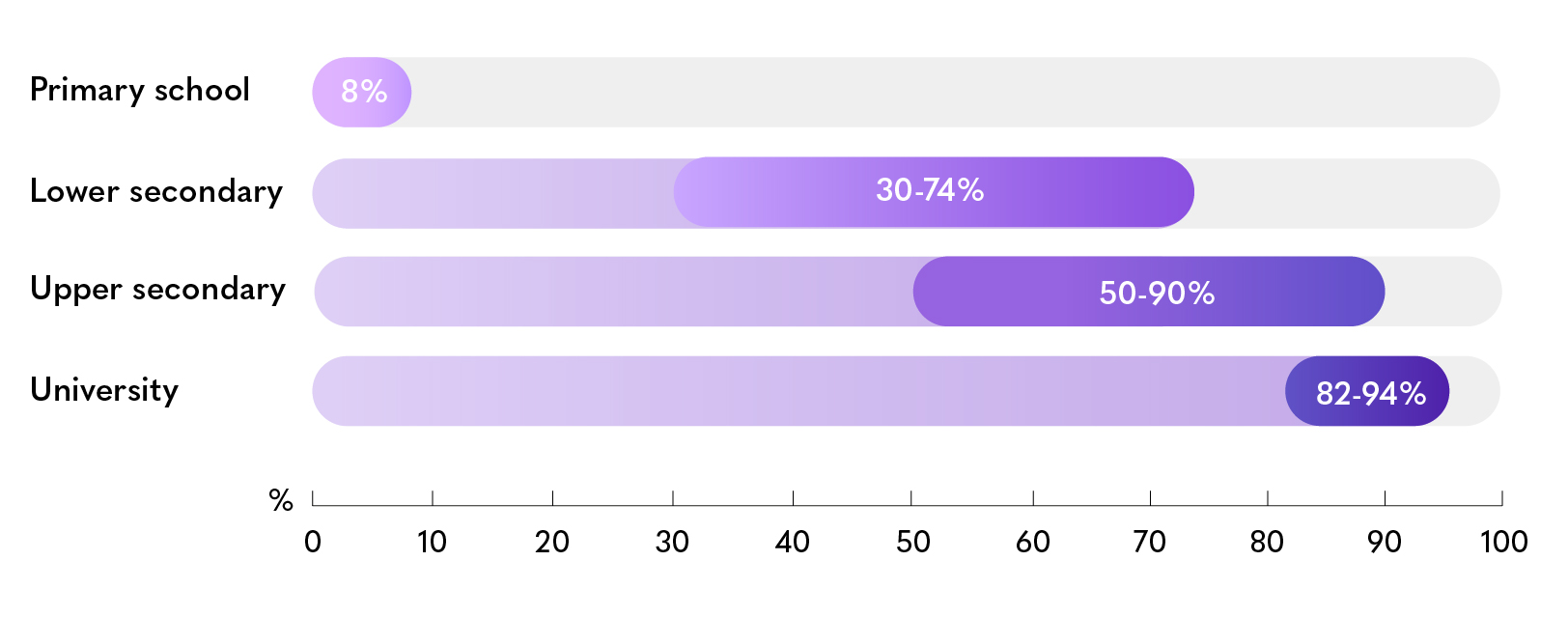
Motivations for AI Use (Grades 6–12):
Data from: Estonia, National Survey
- Improve grades
- Make tasks easier
- Save time
- Answer homework questions
- Generate ideas
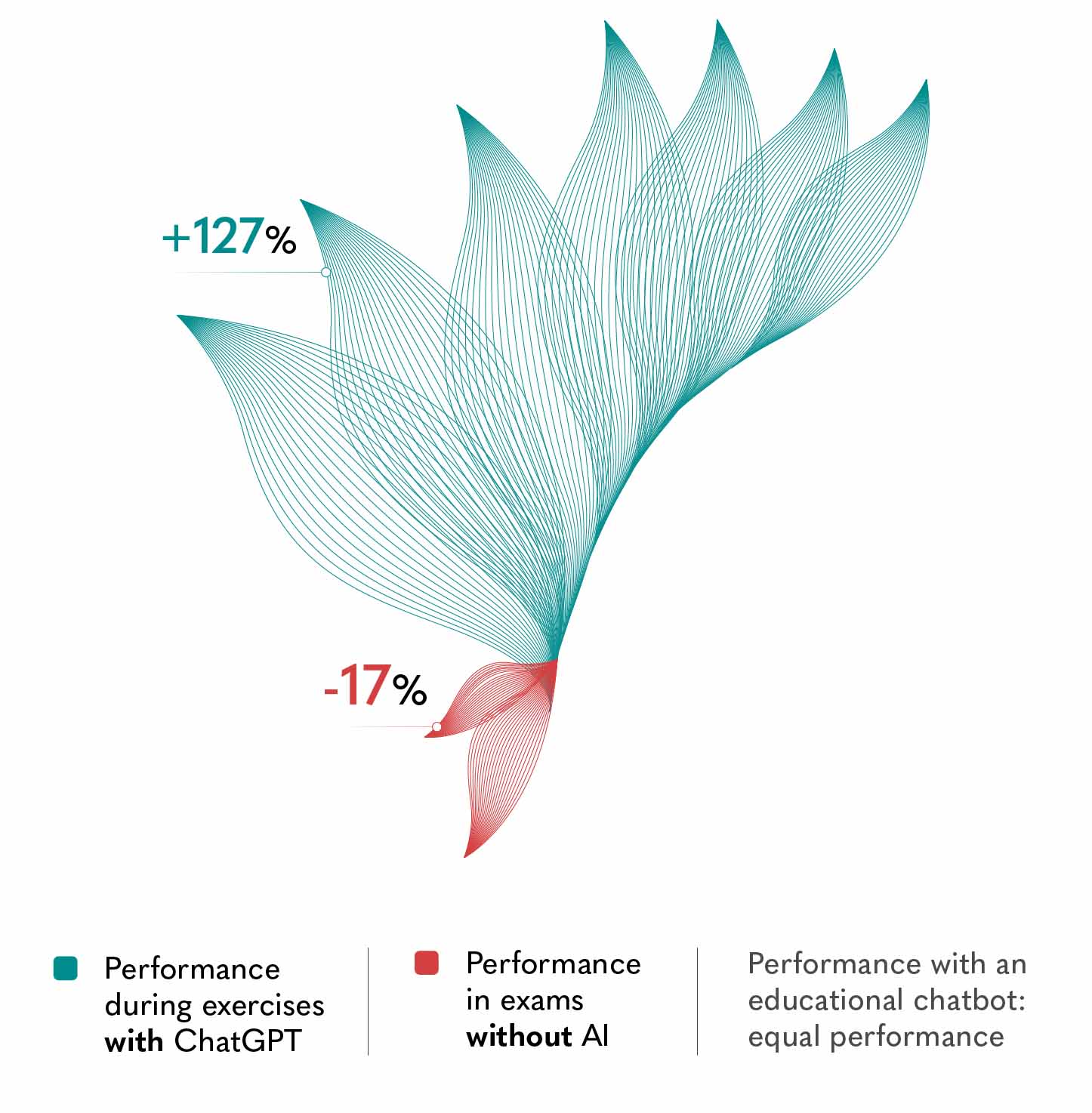
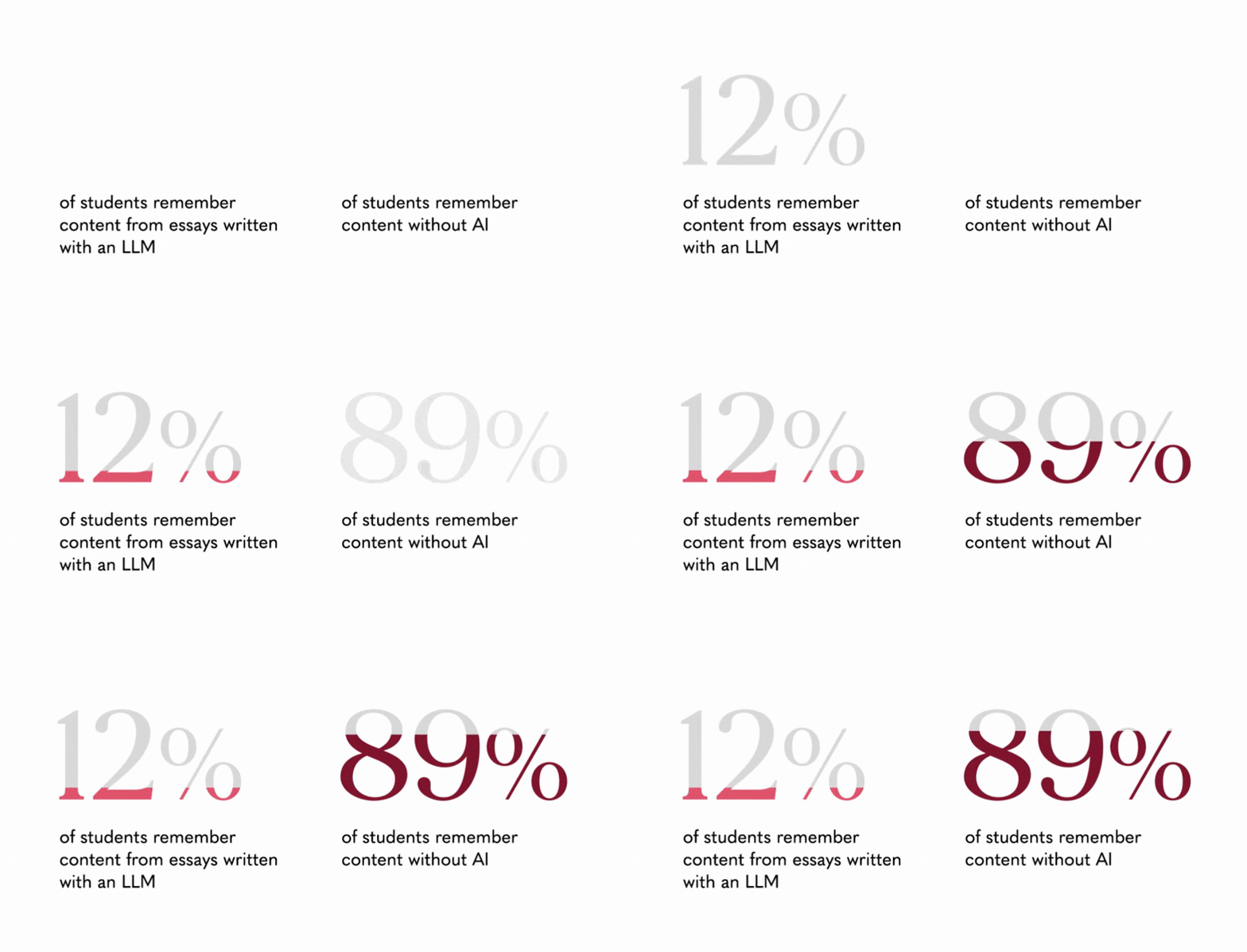
The Risk of “False Mastery”
Data from Bastani et al., 2024
GenAI use can boost immediate performance, but does not ensure lasting learning.
The “Metacognitive Laziness” Phenomenon
When students delegate cognitive tasks to AI, we can observe:
- Reduced metacognitive processes: Less evaluation, guidance, iteration
- Lower neural activation: A shift from content generation to mere supervision of AI output
- Impaired recall
2. Usage Patterns Among Teachers
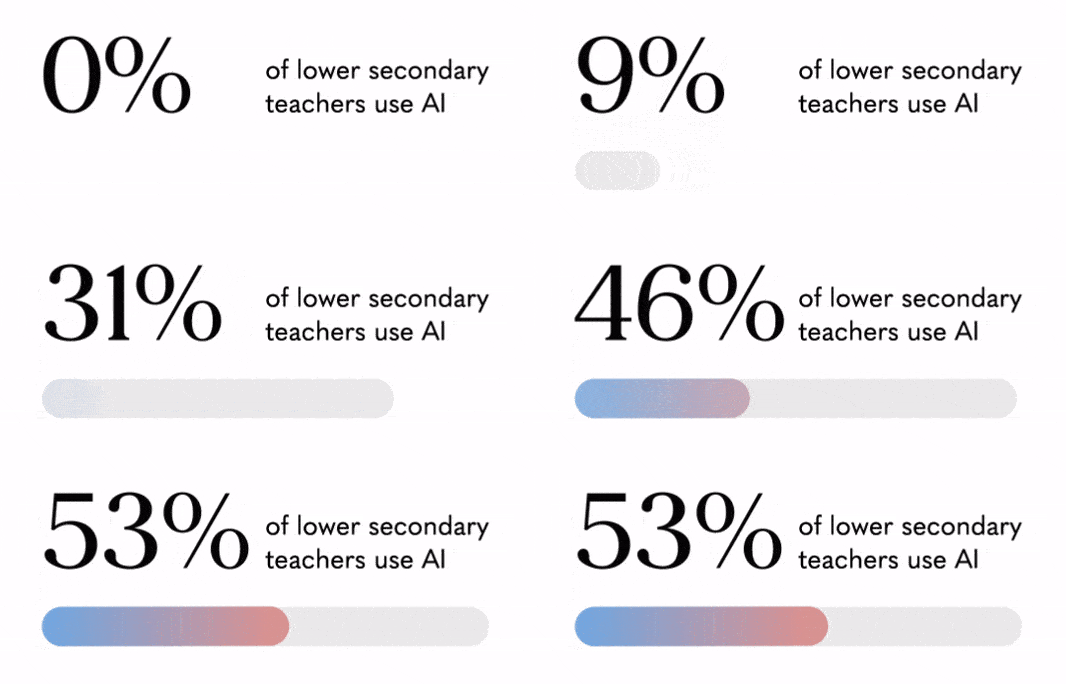
Data from TALIS (Teaching and Learning International Survey) 2024
Main activities (% of AI users):
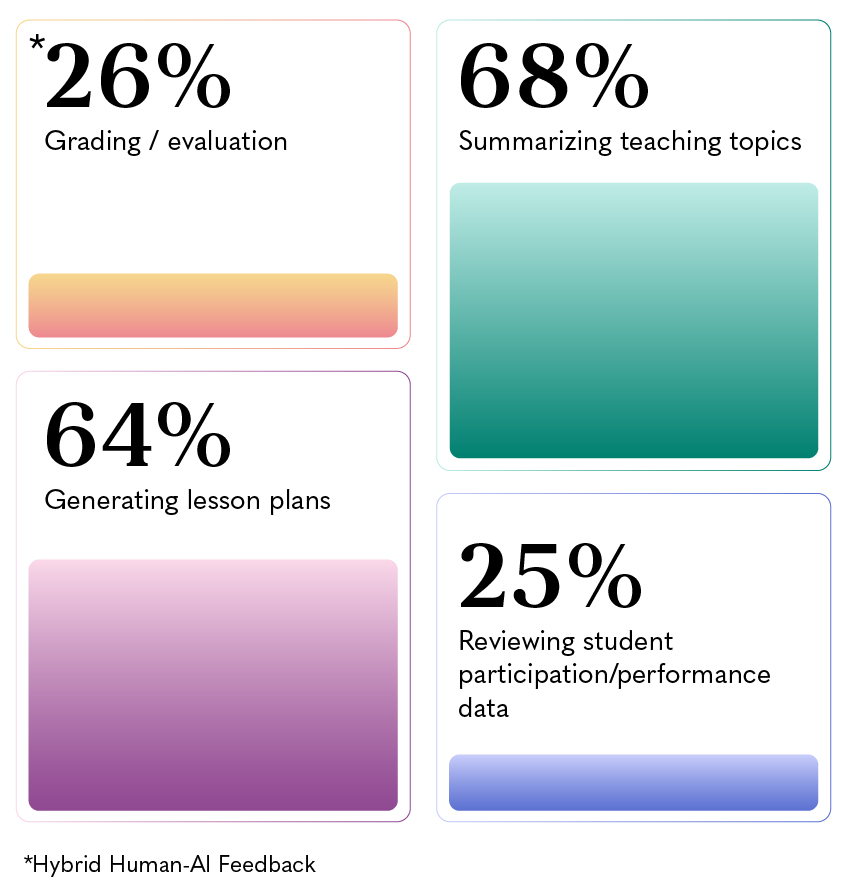
- AI generates more readable feedback
- AI produces more process-level feedback (97% vs. 80% human)
- HOWEVER, students perceive human feedback as more credible, meaningful, and motivating
Optimal Model: AI drafts feedback → Teachers validate, revise, and personalize
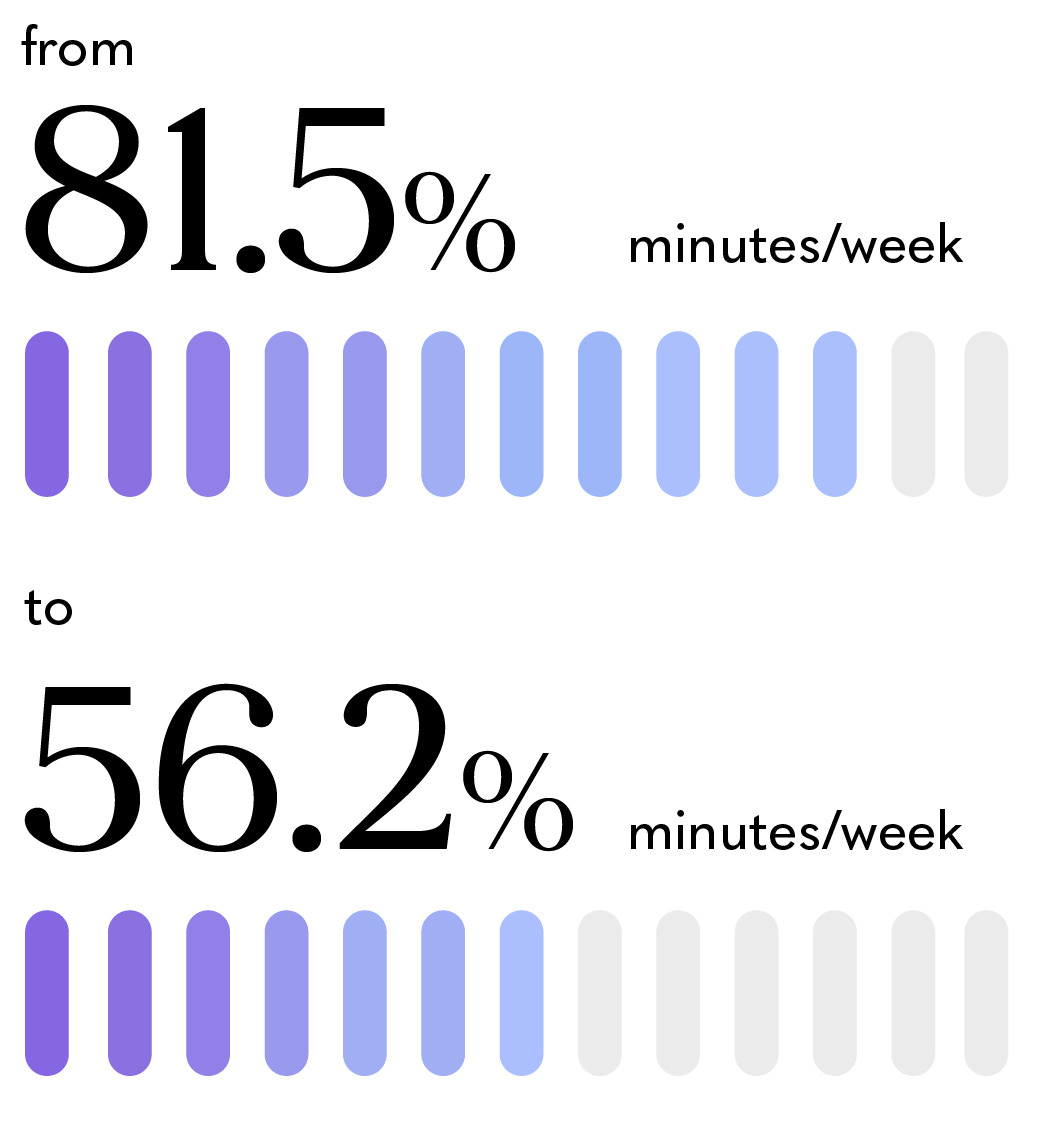
Measured benefits:
Lesson planning time reduced by 31%
Identified Risks:
- “Invisible work”: Time needed to check, correct, and adapt AI outputs
- Skill erosion: Risk of professional atrophy if AI use is passive
- Loss of autonomy: If AI dictates pedagogical decisions
3. Framework for Human-AI Teaming
5 Levels of Collaboration:
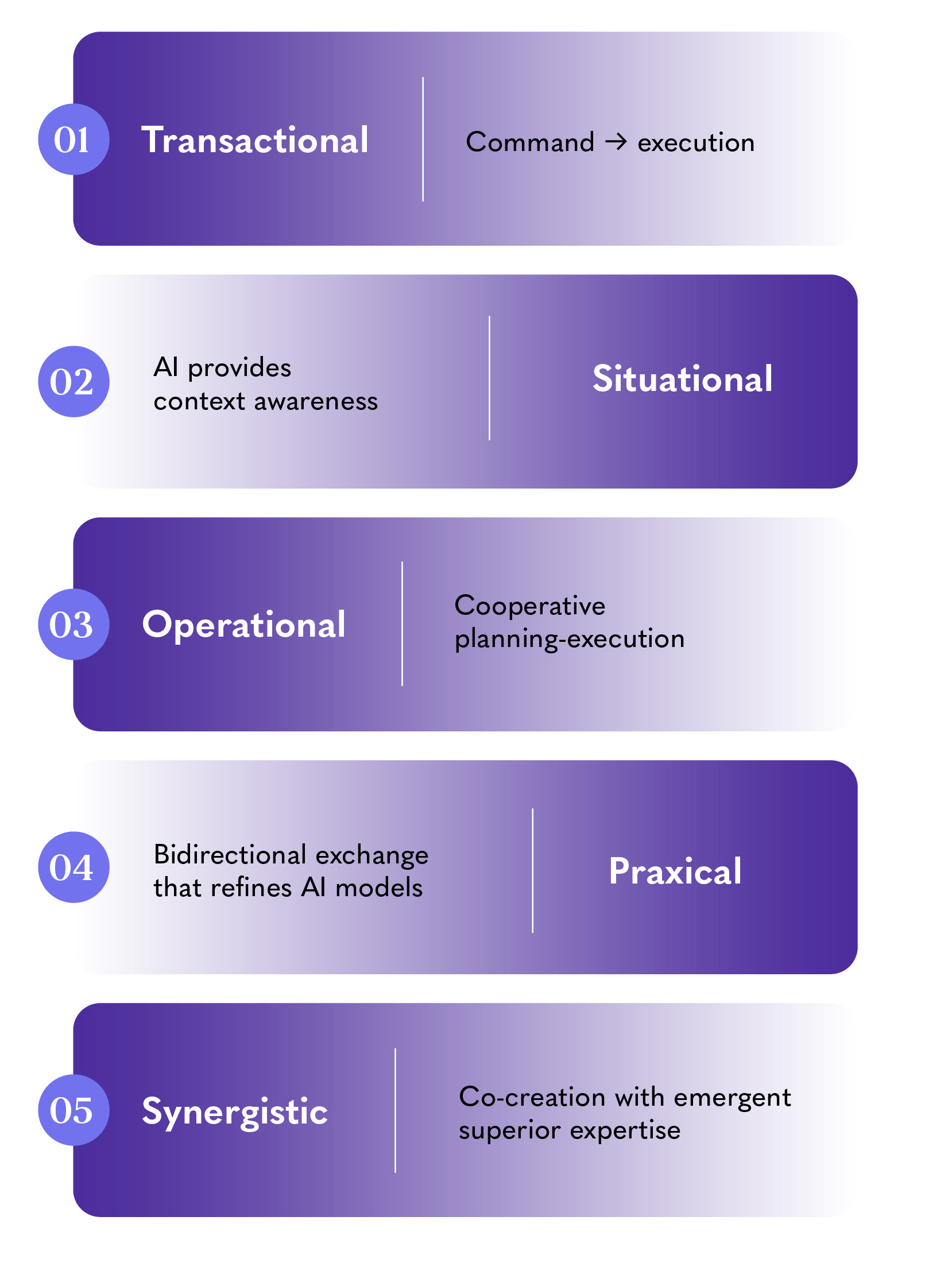
In 58% of cases, human-AI combinations underperform compared to the best of either alone
→ Synergy requires intentional design
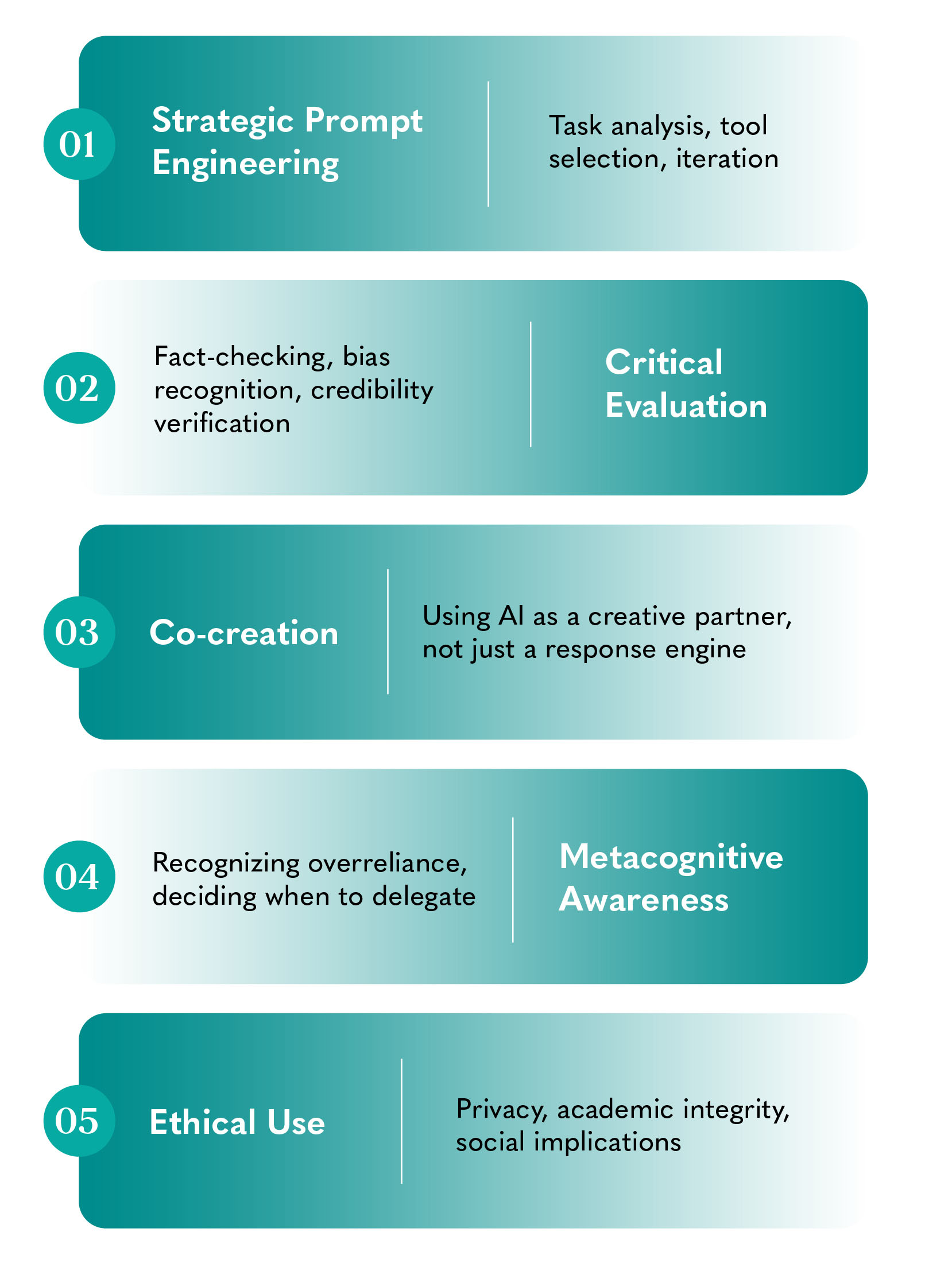
Skills for the Future: Human-AI Hybrid Competencies
Field Notes
Education and AI
Educational systems worldwide aren’t adopting AI uniformly—they’re adapting it to existing structures, values, and constraints. To understand where this leads, our editorial team spoke with educators operating at the intersection of technology and pedagogy in three distinct contexts: Taiwan, the United States, and Europe.
Featured conversations:
- Between the Architect and the Oracle
Gino Roncaglia (University of Roma Tre, Italy) - The Collective Mind
Dennis Tenen (Columbia University, USA) - Where Chips Meet Classrooms
Cheng-Lin Tsai (Taiwan AI Academy) and Jenny Lin (JL Mandarin School), Taiwan
These interviews will form the foundation of our next report on AI’s impact on global educational models.
Economic Watch
The Industrialization of Learning
- AI in education is moving from innovation to infrastructure, reshaping how skills are produced at scale.
- The market’s growth is driven by online learning, mobile access, and institutional pressure to modernize workforces.
- North America currently leads the market, but Asia-Pacific is rapidly emerging as the next EdTech powerhouse.
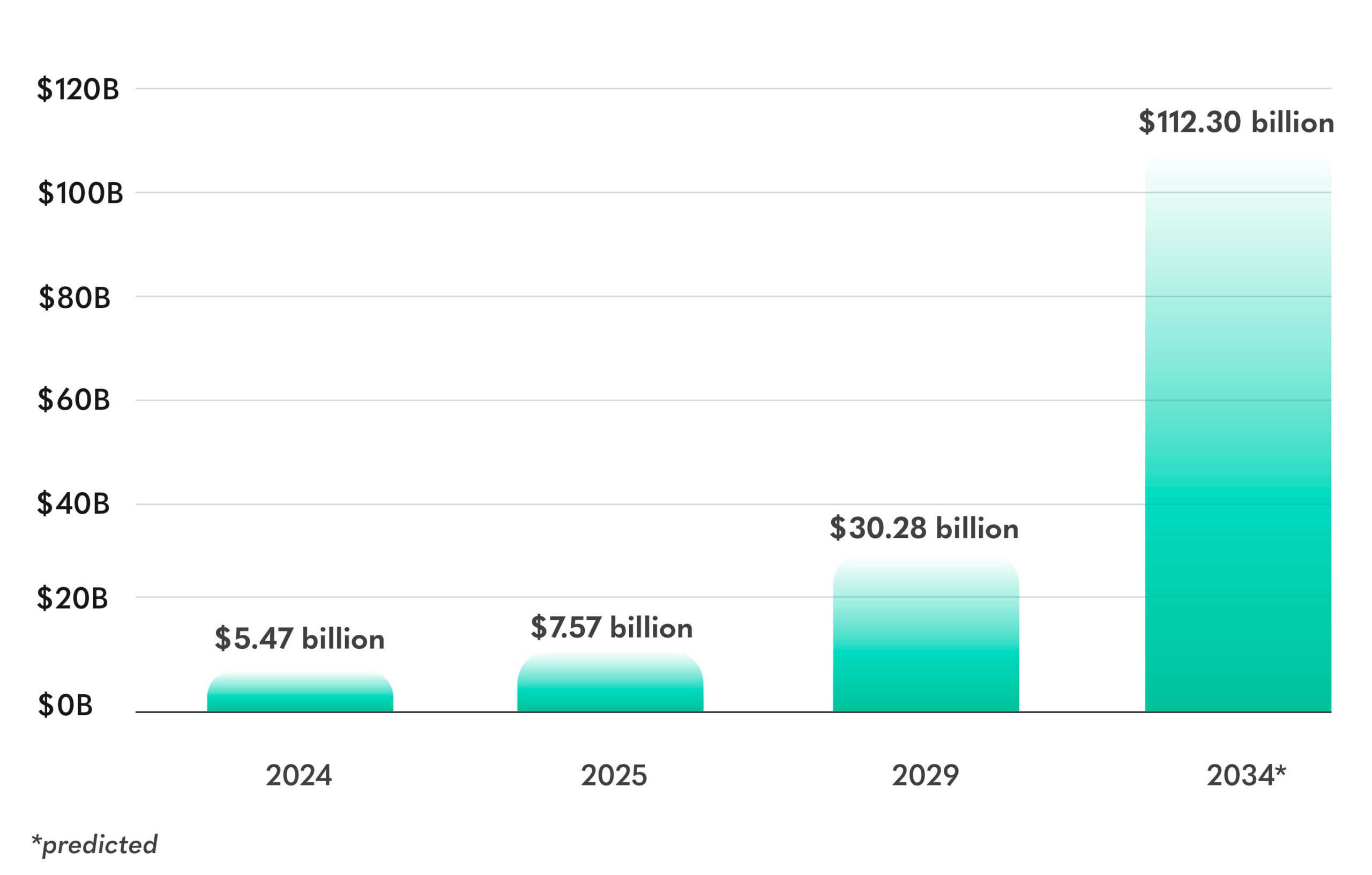
AI Education Market Growth YoY
Source: Research Markets
As AI moves from pilot projects to system-wide deployment, learning is being reorganized along economic lines: scalable, measurable, and increasingly automated. The AI-in-education market is expected to grow sharply in the coming years as schools, universities, and corporate training providers increasingly integrate AI solutions into core learning processes.
These span personalized learning platforms, intelligent tutoring systems, AI-enabled assessment and grading tools, and learning-management systems, alongside supporting hardware such as tablets, interactive whiteboards, and AR and VR devices. AI technologies are used to enhance content delivery, automate administrative tasks, and support teachers and instructors.
The market includes a wide range of participants, from large technology companies such as Alphabet, Microsoft, Amazon Web Services, and IBM to established education providers and specialized EdTech firms including Pearson, Coursera, Duolingo, Blackboard, and regional players. Geography adds another layer. North America still dominates revenues, but the fastest expansion is happening in Asia-Pacific, where governments are aggressively scaling AI-enabled education to support industrial policy, workforce upskilling, and technological catch-up.
Source: World Economic Forum 2025, The Business Research Company
The Big Picture
The Future of Education Worldwide
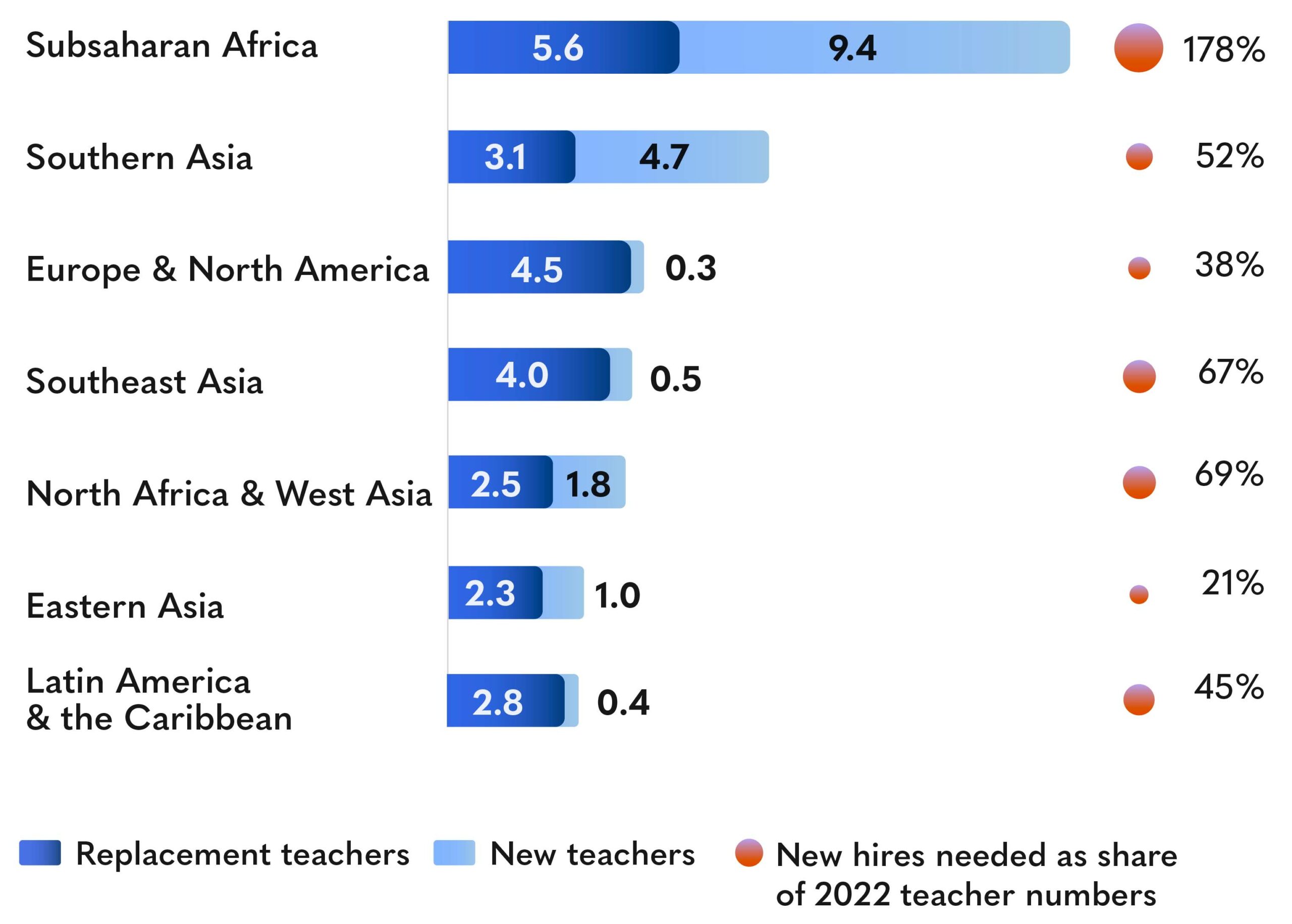
While AI promises to transform learning, the underlying challenge remains stubbornly human: classrooms need teachers. To achieve universal primary and secondary education by 2030, UNESCO estimates the world needs 44 million additional teachers.
Sub-Saharan Africa faces the most severe gap, with 90% of secondary schools lacking sufficient teaching staff. But shortages span low- and middle-income countries across southern Asia, Latin America, and crisis-affected regions. The drivers are structural: high turnover rates, inadequate salaries, poor working conditions, heavy workloads, limited professional development, and cultural and institutional barriers that complicate recruitment. Many young teachers leave within their first years in the profession.
Moreover, the global education system faces a massive funding gap: $120 billion per year is needed to sustain the teaching workforce. However, many governments are spending more on servicing debt than on education or health, and international support for education is set to shrink by 25% in the coming years.
Meanwhile, the regions with the greatest need for technological leverage are also those with the weakest infrastructure, lowest connectivity, and least capacity to integrate complex systems. Even as AI opens new possibilities for personalized learning at scale, the global education system will succeed or fail on the strength of its human foundation—a constraint no technology can bypass.
Sources: United Nations, Asian College of Teachers, Medium
Where Teachers Will Be Needed Most
Source: Forbes
Connecting the Dots…
What Does All This Mean?
The uptake of AI in education today is massive, global, and uneven. ChatGPT marked a clear watershed. Free, intuitive, and self-directed, it revealed that successful technologies are often grassroots, accessible, and user-driven—rather than top-down initiatives. Today, ChatGPT still dominates AI traffic, accounting for 78% of all GenAI platform usage. Yet 60% of this activity comes from high-income countries, while low-income countries account for less than 1%. Open educational resources reflect a similar imbalance: 92% are available in English, leaving large portions of the global student population underserved—many of whom are already facing severe teacher shortages that threaten their access to basic education.
These disparities highlight a crucial tension: while AI can expand access and personalize learning at scale, it is entering a system already marked by structural inequities. Educational systems are integrating AI in different ways, reflecting the strengths and weaknesses of their existing models. But a deeper question emerges: in a world where learning can be automated, personalized, and scaled digitally, are we ready to reconceptualize what intelligence and knowledge truly mean?
AI is no longer experimental; it is becoming infrastructural. What was once tested in pilots is now shaping entire learning ecosystems—and this has profound consequences beyond the classroom. The EdTech market is expanding rapidly, attracting investment not only for revenue potential, but also for its power to shape skills, influence workforce readiness, and control the data that underpins global talent flows. Control over platforms increasingly equates to control over learning itself, creating long-term lock-in for content, pedagogy, and measurement systems.
Yet AI alone cannot transform education. Its impact depends on how it is governed, integrated, and guided by human expertise. Evidence-based pedagogy, capable and empowered teachers, robust system design, and accountable governance are essential to ensure that AI enhances learning rather than replacing its human foundations. The future of learning—and the value it produces—will hinge on the choices and systems we build today, and on how we shape them to serve everyone.
More from Smart Signals