
Global Perspectives
This editorial draws on a conversation with Prof. Mustafizur Rahman
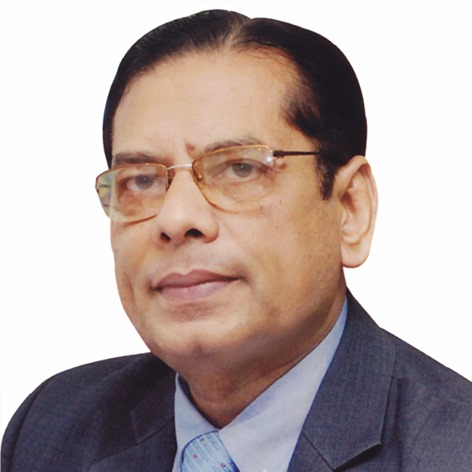
Mustafizur Rahman
Distinguished Fellow at the Centre for Policy Dialogue (CPD)
Professor Mustafizur Rahman is a Distinguished Fellow at the Centre for Policy Dialogue (CPD), Dhaka, where he was previously the Executive Director. Professor Rahman had previously taught at the University of Dhaka. Dr. Rahman was educated at Moscow State University, Russia, where he did his PhD, at the University of Oxford, UK, and the University of Warwick, UK, where he was a Post-Doctoral Fellow, and at Yale University, USA, where he was a Senior Fulbright Fellow. He was a member of the White Paper Committee set up by the Interim Government and is currently a member of the High-Level Expert Group to Advise on the Implementation of Smooth Transition Strategy of Bangladesh in view of Bangladesh’s LDC Graduation.
Key Takeaways
– The country’s reform post-Monsoon Revolution: the importance of transparency
– The central role of Gen Z and social media
– A new degree of strategic autonomy in a multipolar regional environment
When students took to the streets of Dhaka in July 2024, they accomplished something remarkable: they ended Prime Minister Sheikh Hasina’s 16-year rule and triggered the most significant political shift in Bangladesh’s 55 years of independence. A year later, the country, under Nobel laureate Muhammad Yunus’s interim government, is attempting something equally ambitious—comprehensive reform while maintaining stability.
The scale of this transformation is striking: as Prof. Rahman put it, “People now know this is a once-in-a-generation chance to really change things.” Eleven reform commissions have been established, tackling everything from banking and policing to political structures and constitutional law. A white paper committee has scrutinized the economy after years of misleading data on growth, unemployment, and financial health.
Technology and digital engagement have played a central role in shaping these last months of profound change. Social media—TikTok, Telegram, Discord—were the nervous system of youth mobilization, enabling coordination, information-sharing, and collective action, even during temporary internet shutdowns. “Young people adapted instantly when platforms were cut off,” Rahman observes. “They found new ways to connect, showing both resilience and creativity.” Yet today these tools carry risks: misinformation is rife, and the possibility of government controls on digital platforms threatens the freedom that fueled the revolution.
That’s why the same students who had led the revolution on social media, in February 2025, formalized their activism, founding the National Citizen Party (NCP)—Bangladesh’s first student-created political party. Positioned as a centrist alternative in a historically polarized landscape, the NCP embodies a recognition that street protests alone cannot deliver lasting change. As Professor Rahman notes, “Without a party, they would never have been able to bring their vision to life.” The move from grassroots activism to institutional politics is a unique case in Bangladesh’s history.
The emergence of the NCP has already shifted power dynamics. The Awami League, long dominant, now faces prosecutions against many of its leaders and the suspension of some party activities. Structures once considered untouchable are being challenged in ways unimaginable just eighteen months ago.
The path to elections, slated for no later than February 2026, underscores the complexity of this moment in time. Debates rage over parliamentary reform: some advocate a bicameral system, others debate proportional representation versus the Westminster model. Should a referendum precede constitutional changes and elections? These are fundamental questions about the nature of democracy itself, and there is no clear consensus. In fact, the interim government faces a profound dilemma: some argue the next elected government should complete the reforms; others insist that the interim administration must embed changes in the constitution now, or risk missing this once-in-a-generation opportunity.
Structures once considered untouchable are being challenged in ways unimaginable just eighteen months ago.
Meanwhile, the country faces substantial economic hurdles. Inflation hovers around ten percent, eroding purchasing power. Roughly a quarter of bank loans are in default, while an estimated $15 billion leaves the financial system every year. Unemployment, especially among the educated youth, remains high. Domestic investment stagnates, hindered by high interest rates and lingering uncertainty about the political transition.
There are signs of stabilization, though. Foreign reserves hold steady at around $38 billion. Banking reforms aim to restore central bank autonomy. And for the first time in years, an honest accounting of the economy is underway—an acknowledgment that transparency is a prerequisite for reform.
The country’s regional standing is changing, though. Relations with India, long a cornerstone, are becoming more complex. At the same time, new avenues are opening with Pakistan around trade and connectivity. China continues to invest heavily in infrastructure, and the United States remains a key partner. Globally, U.S.-imposed tariffs in the region could particularly benefit Bangladesh’s textile exports—second globally only to China. The country is navigating a more multipolar regional environment, exercising a degree of strategic autonomy previously unavailable to it.
Professor Rahman encapsulates the year in Bengali: প্রত্যাশার চাপের নিরীখে মিশ্র অর্জন (Prottashar Chaper Nirikhe Misro Orjon)—“Mixed achievement against the backdrop of great expectations.”