Education + AI, Trends
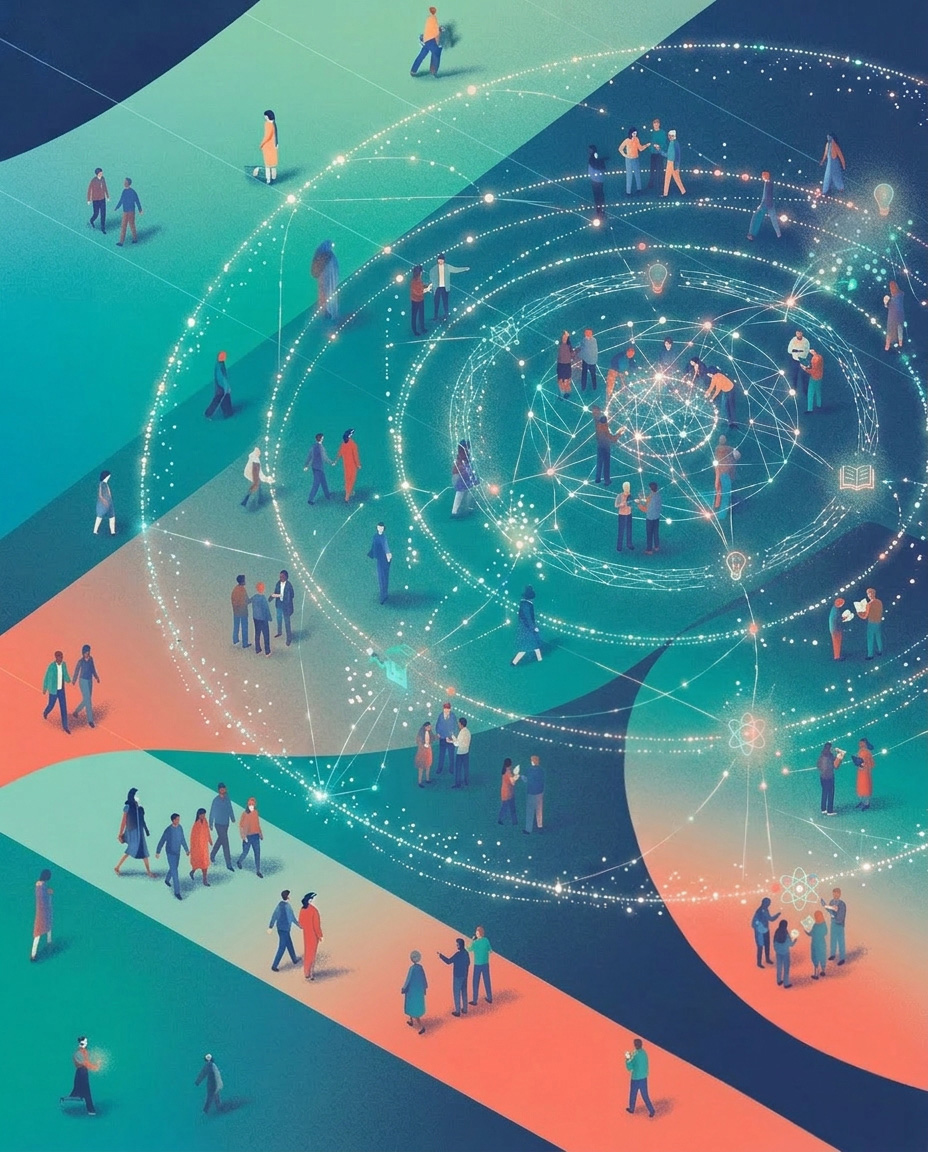
Felisa Tibbitts, UNESCO Chair in Human Rights and Higher Education at Utrecht University, sets the frame. AI is not neutral — it operates within systems already shaped by bias, inequality, and uneven access. When it enters education, it doesn’t erase those dynamics. It processes them, and returns them at scale. Her human rights lens reframes the entire debate: the question is not whether AI can personalize learning, but whether it does so for everyone — or only for those already well-served.
That question lands differently depending on where you are. In Mali, Michael Leventhal and the RobotsMali AI4D Lab are using AI to do something that colonial language policy never managed: build a real written literature in Bambara, one of West Africa’s most widely spoken but barely written languages. In India, Adit Gupta of MIER College of Education maps a system serving 300 million learners across 19,500 mother tongues — where AI-powered language tools are beginning to make quality education possible in Santali, Dogri, and Bodo, but where the communities that need these tools most are precisely those least equipped to verify their accuracy.
In Latin America, founder and CEO of Empujón Educativo Marianela López exposes a subtler form of exclusion: the data problem. If AI systems are trained on the wrong metrics — standardized Spanish that codes regional dialects as errors, grades and attendance that capture nothing about how a child actually learns — then deploying AI at scale means amplifying, not correcting, existing inequalities. Her work with neurodiverse students in Argentina, Mexico, and Uruguay is building the infrastructure the region’s schools were never designed to provide.
In MENA, Muhammad Gawish of iSchool confronts a demographic reality that makes everything else more urgent: 55% of the region’s population is under 30, and most of them are being educated for an economy that no longer exists. The gap is not between countries — it is within them, between private urban schools connected to global networks and rural or peri-urban classrooms where quality technology education is, in many cases, simply absent.
Together, these voices and cases don’t frame AI as a solution. They frame it as a mirror — one that reflects, with uncomfortable clarity, the structural inequalities that education systems were supposed to overcome. Whether AI accelerates that work or undermines it depends entirely on choices that are not technological. They are political, pedagogical, and deeply human.
The Readings
Thinking About Human Rights, AI, and Education
By Felisa Tibbitts, UNESCO Chair in Human Rights and Higher Education and Chair in Human Rights Education at the Human Rights Centre of Utrecht University (Netherlands)

“The right to education is another core human right and is recognized as essential for empowering and developing individuals and societies.”
Rewriting the Locale in Mali
AI as the Elias Lönnrot of Mali’s Bambara Language
By Michael Leventhal, Founder and Principal Investigator at RobotsMali
Regional Insight
Conversation with a Local Educator
By Mamadou Dembélé, part of RobotsMali.
“Many hundreds of kids learn to read and to read their first, second and fifth book in Bambara, with obvious delight… and pride. Technology changes every second, but we’ve tried to use technology to create something that would endure 100 years.”
The Language of Inclusion
AI, Linguistic Diversity, and the Limits of Scale in Indian Education
By prof. Adit Gupta is Principal of MIER College of Education (Autonomous), Jammu, and Director of the MIER Group of Institutions
Regional Insights
Perspective from MIER College of Education (Autonomous)

“The distinction between entry-level training and professional development is gone: Living in a rapidly changing world means constantly learning, acquiring new basic skills that didn’t even exist yesterday.”
Measuring What Matters
Neurodiversity, Language, and the Hidden Inequalities of AI in Latin American Education
An Interview with Marianela López, founder and CEO of Empujón Educativo
Regional Insights
The Work of Empujón Educativo
“Changing that dynamic is not a technical problem. It requires shifting the cultural assumptions embedded in how schools understand achievement, how they display it, and what they signal, implicitly or explicitly, about the students who do not conform to a single standard.”
Rewiring the Future
AI as an Enabler for Future-Proof Learning in the MENA Region
By Muhammad Gawish, co-Founder & CEO of iSchool is the #1 online Ai & coding platform in MENA for students.
Regional Insights
A Synergic Education with iSchool

“This is a more demanding standard than most current policy frameworks apply. It suggests that purely technological solutions—deploying devices, installing broadband, licensing platform access—are necessary but not sufficient. The cultural and relational dimensions of learning cannot be engineered away. They must be designed from the outset.”