Language
What makes a language perfect?
For centuries, the answer seemed obvious. A perfect language was one with stable grammar, refined literature, and institutions capable of deciding which words were correct, which forms were elegant, and which voices deserved to endure. Perfection, in other words, came from above.
But languages do not survive because they are perfect. They survive because they remain useful to the communities that speak them.
Every language is, before anything else, a social technology. It allows strangers to become neighbors, memories to outlive generations, identities to persist across borders, and new realities to become thinkable. As societies change, languages either evolve with them or risk becoming less capable of describing the lives their speakers are actually living. Linguistic perfection, then, is not a fixed quality but a moving target: the ability to keep solving the problems each generation inherits.
For this chapter of Global Perspectives, four linguists from around the world show us how that process can unfold differently across languages and cultures. In Japan, a younger generation is quietly dismantling one of the world’s most sophisticated systems of linguistic hierarchy, searching for intimacy in a society increasingly defined by loneliness. Urdu demonstrates that a language can become a homeland of its own, preserving belonging through script, poetry, and shared cultural practices long after political borders have disappeared beneath its speakers’ feet. Swahili shows that a language does not need purity or exclusive ownership to unite millions of people; sometimes neutrality and openness are precisely what allow a fragmented society to imagine itself as a community. German, meanwhile, illustrates how extraordinary linguistic flexibility can help people keep pace with history itself, generating new words that transform technological disruption, political upheaval, and collective anxiety into experiences that can finally be named.
These stories emerge from different continents, different histories, and profoundly different linguistic traditions. Yet they all arrive at the same conclusion. A language does not become perfect by resisting change, preserving purity, or approaching an abstract ideal. It becomes perfect when it helps a community understand the world it inhabits—and gives people the words to change with it.

The Third Language
By Mafe de Baggis
Language is not only a tool for communication — it is the space where meaning is shaped, challenged, and transformed. In a world increasingly dominated by algorithms and generative text, this series asks an essential question: What happens when meaning cannot be reduced to probability or prediction? A quarterly column exploring language, storytelling, and the spaces where meaning resists automation.
Discover the issues hereThe Readings
Japanese
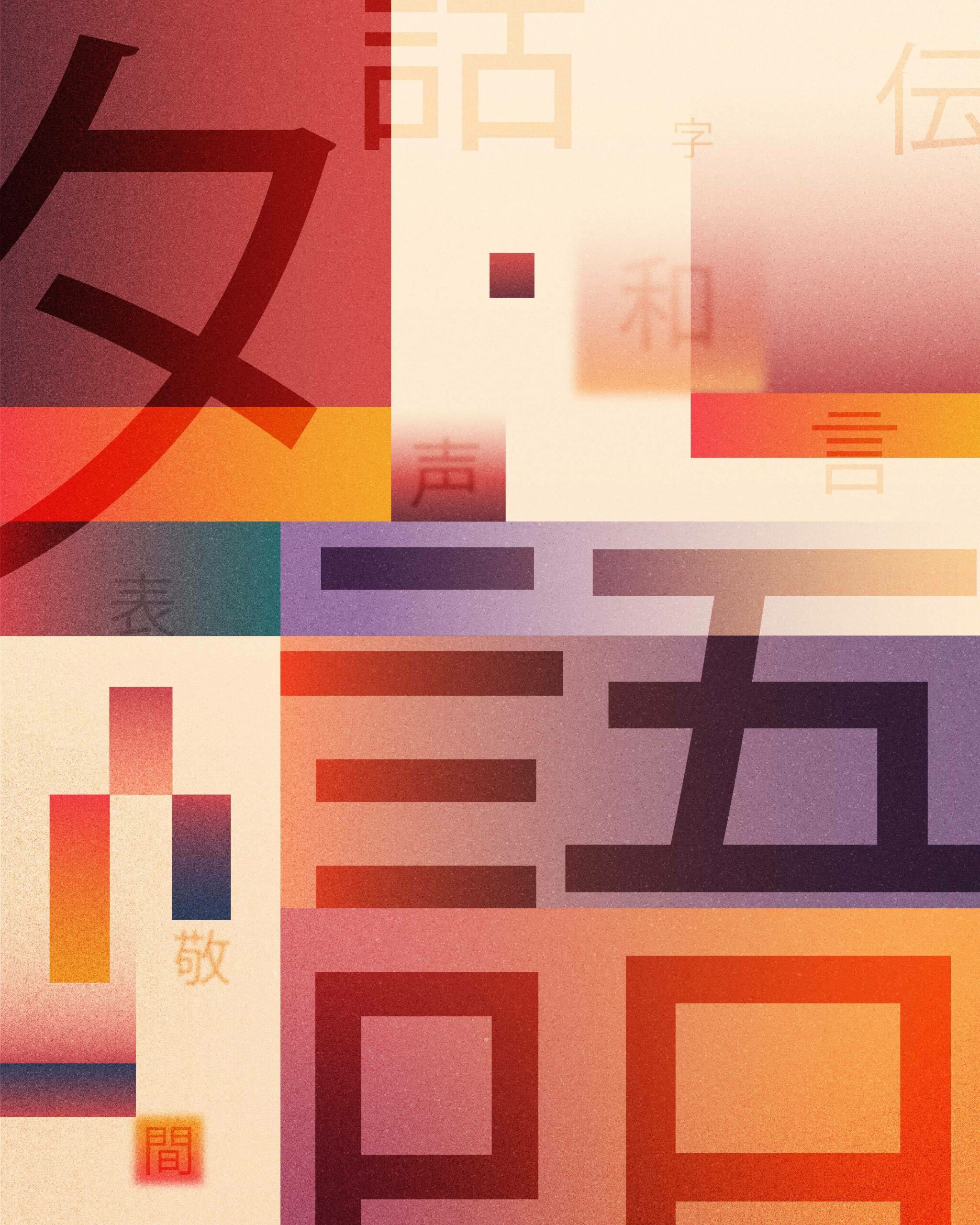
Killing Keigo
Feeling less lonely through language
By Minako Zienowicz
In Japan, language has long been a tool for navigating respect, hierarchy, and social harmony. This article explores the role of keigo, the honorific system that shapes Japanese relationships, and how a younger generation is challenging its rules in a changing society.
Swahili
No One’s Language
Building a Nation for Everyone
By Peris William
In East Africa, Swahili became a bridge between hundreds of communities without belonging to just one. This article explores how a language shaped by trade, migration, and cultural exchange grew into a powerful force for social cohesion and shared identity.
Urdu
A Homeland on the Tongue
Drawing Borders for a Borderless Nation
By Kashif Khalid
Born from centuries of cultural contact, Urdu has become a homeland carried through words rather than borders. This article explores how script, poetry, and shared traditions allow a language displaced by history to remain a living expression of identity.
German
Naming the PresentHow a Language Keeps Finding Words for What We’re Living Through
By Anastassia Friedrich
As the world changes, languages must find new ways to describe it. This article explores how German compounds transform emerging experiences, anxieties, and social shifts into words—creating a flexible language that evolves alongside history.
Explore the Global Perspectives series