Futures in Context

Unlike most non-human biological cognition, human cognition is changing: the average IQ in many countries is increasing (the Flynn effect), our memory (Sparrow et al. 2011) is changing due to the Google effect (digital amnesia), navigation abilities (McKinlay 2016; Milner 2016) anthropied because of satnavs, cognitive rewards mechanisms are changing because of gamification, etc. This is a process that is accelerated by technology and will be magnified by the use of cognitive assistants and cognitive prosthetics…

Bhatnaga et al., 2018
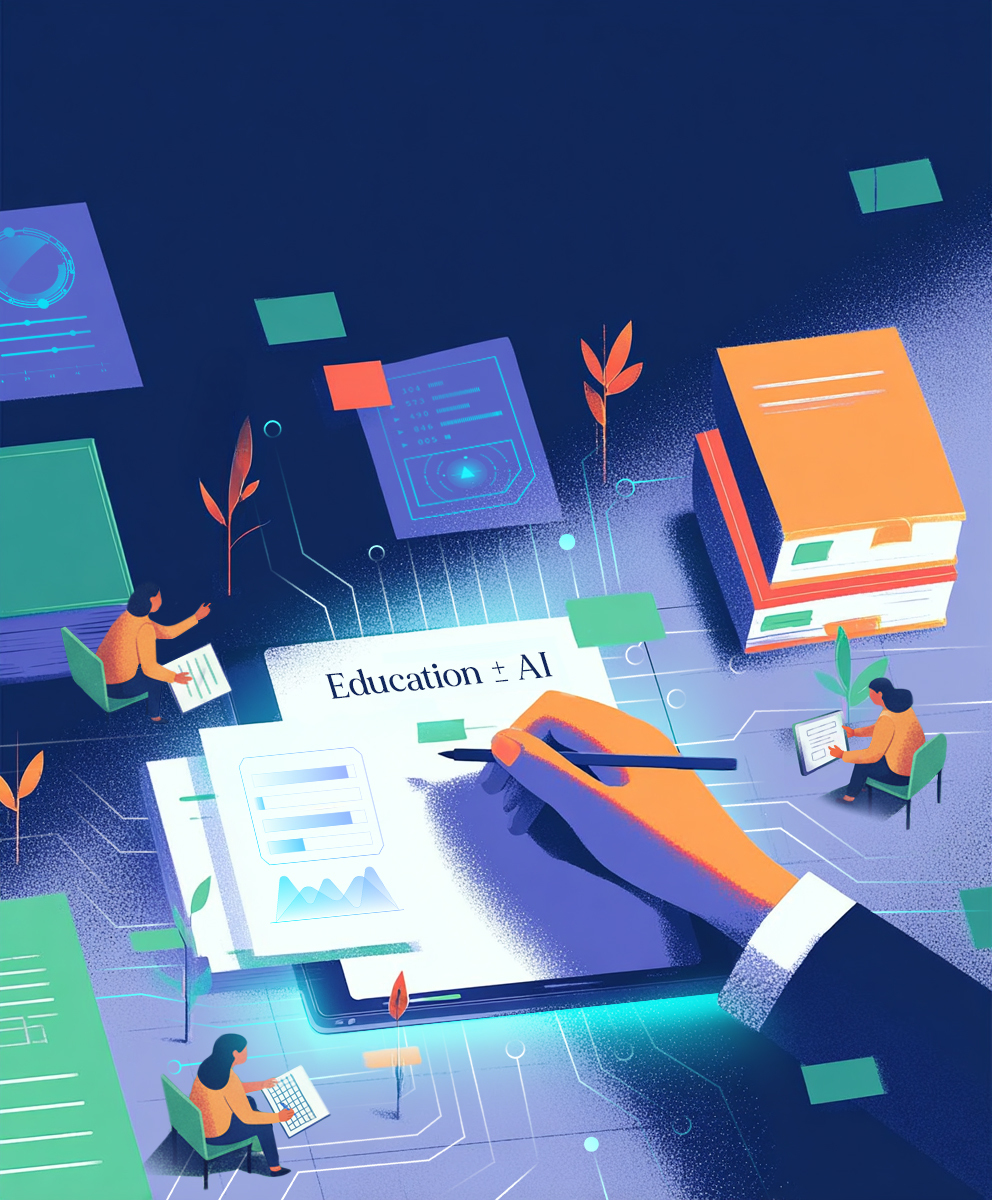
Education & AI is a global report mapping how artificial intelligence is reshaping learning — not as a prediction, but as a diagnosis of where we actually stand.
The report brings together over twenty contributors: scholars, practitioners, policymakers, and EdTech organizations working across six continents. Their perspectives span philosophy and classroom practice, human rights law and language technology, national education strategy and grassroots experimentation. What holds them together is a shared refusal to treat AI as either a silver bullet or an existential threat — and a commitment to asking the harder questions underneath.
Each chapter approaches the subject from a different angle. The first examines what intelligence and learning actually require, through the work of leading academics and a comparative look at educational models in Europe, the United States, and Taiwan. The second asks what inclusion genuinely demands when AI systems aren’t built for your language, your neurodiversity, or your infrastructure — following the work of organizations in Mali, India, Latin America, and MENA. The third maps the ethical and legislative frameworks emerging around AI in education, and argues that the philosophical foundations matter as much as the policy instruments. The fourth gives the floor to students themselves: 251 voices across 26 countries, asked directly what this moment feels like from the inside.
Woven through all of it is an original body of quantitative research spanning students, teachers, and institutions worldwide — because the debate about AI and education cannot stay abstract.
This is not a report about the future. It is a report about the present — and the choices, already underway, that will define what comes next.
Introduction & Data

On AI, Learning, and Education
Jannis Kallinikos, of the London School of Economics, and Michaël Oustinoff, of the Université Côte d'Azur, ask what AI really does to learning — and to language. Backed by original global research across six continents, this section sets the terms of the debate: mapping the deep questions this technology forces us to ask, before the answers get too easy.
Discover the articlesOn Artificial Intelligence, Learning, and Education
By Jannis Kallinikos – Professor Emeritus at London School of Economics
The Eternal Value of Learning Languages
By Michaël Oustinoff – Author & Professor at the Université Côte d’Azur
Quantitative Research: AI Impact on Education Worldwide
Curated by Imminent
Chapter 1

Classrooms Under Pressure: Europe, the U.S., and Taiwan
What is intelligence, really — and have our schools ever measured the right things? Chapter 1 brings together Rose Luckin of University College London, Gino Roncaglia of Roma Tre University, and Dennis Yi Tenen of Columbia University to examine how Europe, the U.S., and Taiwan are responding to AI in education: not just in policy, but in practice.
Discover the articlesHow AI is Changing Schooling, Learning, and the New Forms of Intelligence(s)
By Rose Luckin – Professor at University College London
EUROPE
Between the Architect and the Oracle
Interview with Gino Roncaglia – Professor at the University of Roma Tre
Regional Insights: Estonia’s AI Leap 2025
By Marion Joepera – Content Strategist & Senior Copywriter
UNITED STATES
The Collective Mind
Interview with Dennis Yi Tenen – Professor at Columbia University
Regional Insights: A Grassroots, Pluralist Adoption
By Lutiana Valadares Fernandes Barbosa – Adjunct Professor Georgetown University
TAIWAN
Where Chips Meet Classrooms
By Jenny Lin – Founder of JL Mandarin School
Regional Insights: The Work of AI Academy
By Cheng-Lin Tsai – Technical Director at the Taiwan AI Academy
Chapter 2

AI as a Global Opportunity for Inclusion in Education
What does inclusion actually mean when AI doesn't speak your language — or wasn't built for how you learn? Felissa Tibbitts, UNESCO Chair in Human Rights and Higher Education at Utrecht University, frames the stakes. Then four organizations — from Mali, India, Latin America, and MENA — show what the answer can look like in practice.
Discover the articlesThinking About AI, Human Rights, and Education
By Felissa Tibbitts – UNESCO Chair in Human Rights and Higher Education
MALI
Rewriting the Locale in Mali
By Michael Leventhal – Founder of RobotsMali
Regional Insights: Conversation with a Local Educator
INDIA
The Language of Inclusion in India
By Adit Gupta – Director at MIER College of Education (Autonomous)
Regional Insights: Perspective from MIER College of Education (Autonomous)
ARGENTINA
Measuring What Matters in Argentina
By Marianela Lopez – CEO & Founder at Empujón Educativo
Regional Insights: The Work of Empujón Educativo
MENA REGION
Rewiring the Future in the MENA region
By Muhammad Gawish – CEO & Founder at iSchool
Regional Insights: A Synergic Education with iSchool
Chapter 3

Ethical, Legislative, and Diplomatic Framework
Liam Wegimont of Global Education Network Europe and Mike Garner of Connelly Partners ask a question that precedes every policy debate: what is education actually for? Chapter 3 maps the ethical, legislative, and philosophical frameworks emerging around AI — and argues that the answers we need already exist, if we know where to look.
Discover the articlesThe Future of Critical Thinking
By Mike Garner – Head of Creative Strategy, Connelly Partners
Monster or Messiah?
By Liam Wegimont – Executive Director at Global Education Network Europe
Chapter 4
Voice to the Students
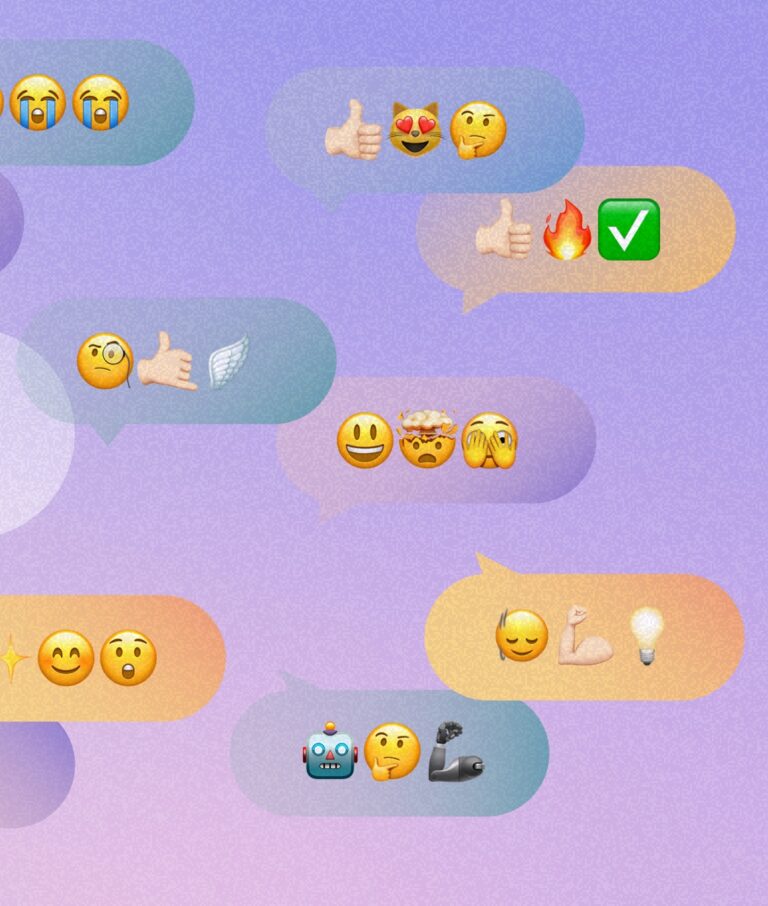
A conversation about education without students is incomplete. So we asked them directly — an anonymous global survey, 251 voices across 26 countries, from an 11-year-old in Ghana to a doctoral candidate in Taiwan. Chapter 4 is what came back: unmediated, unfiltered, and harder to ignore than any policy framework.
Discover the articleDiscover More from Futures in Context